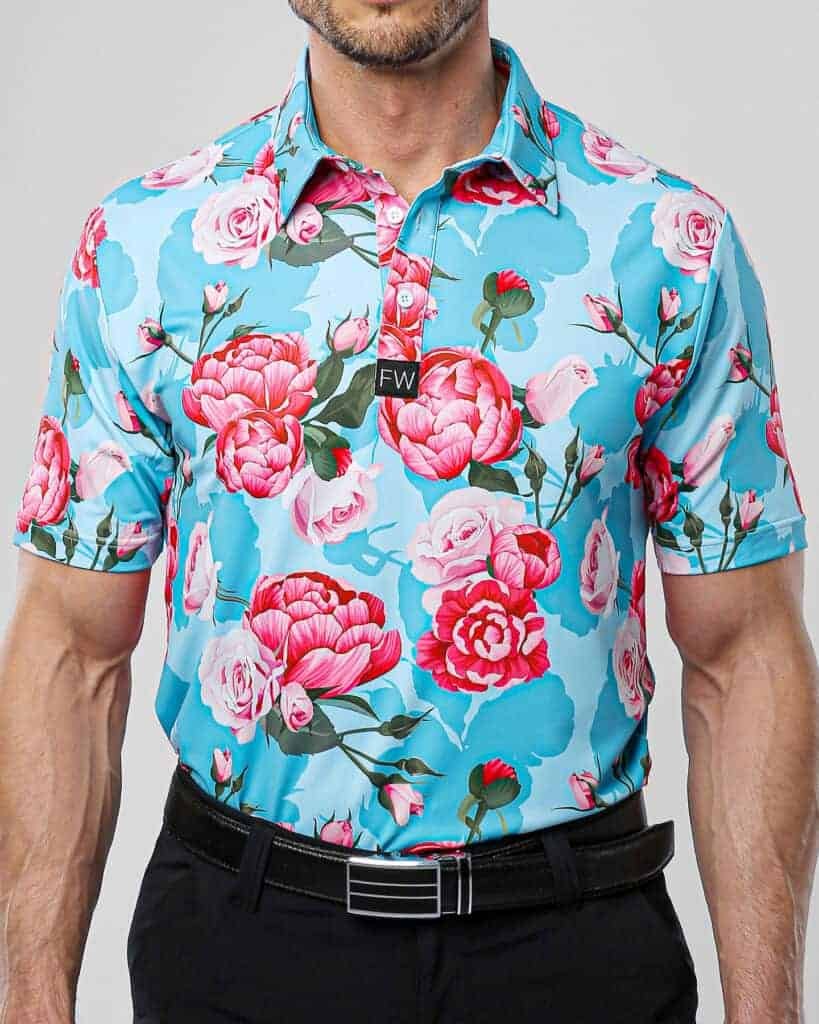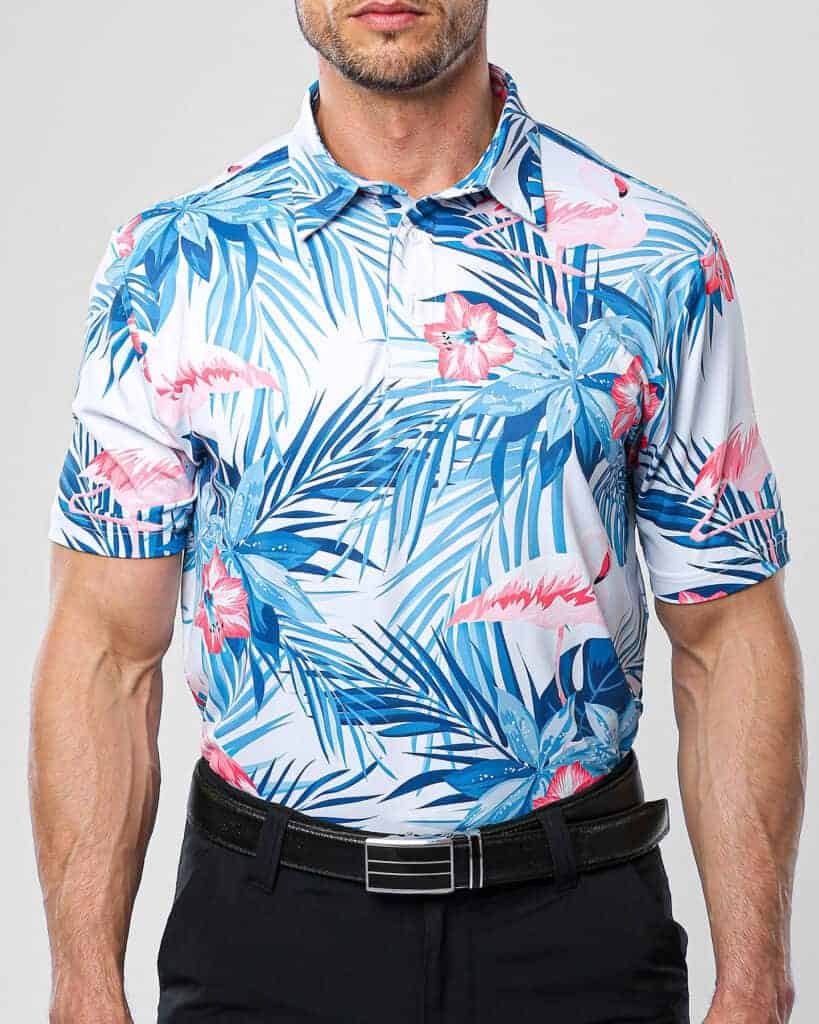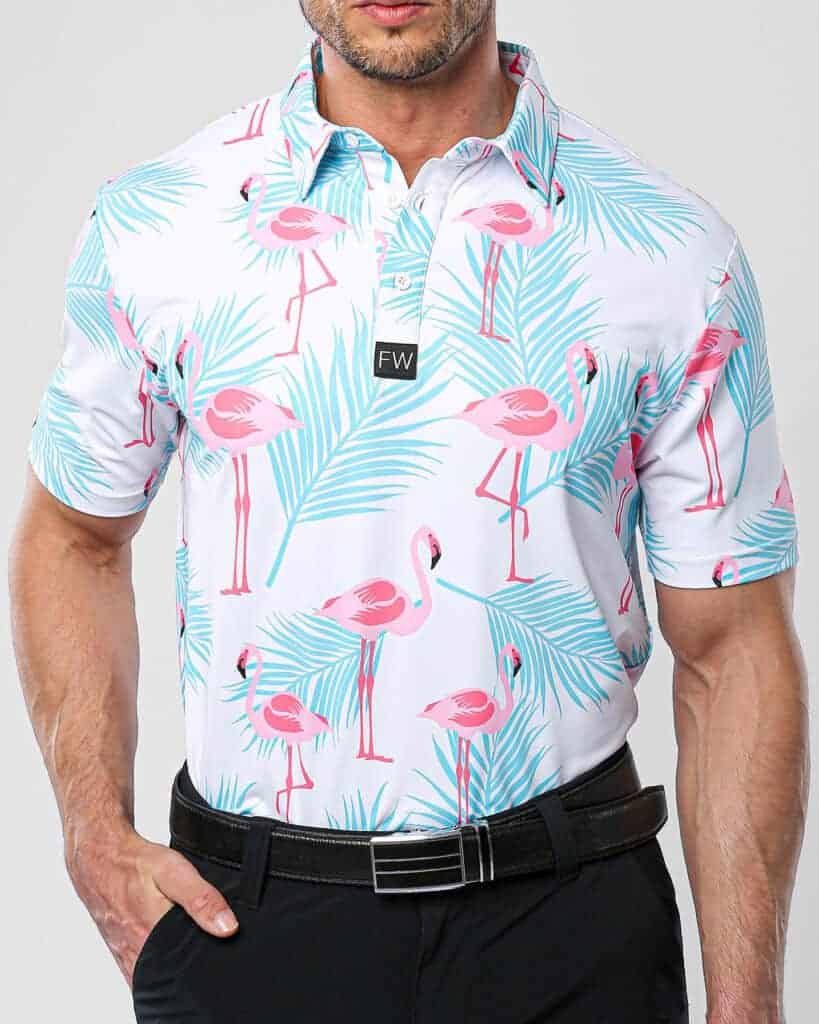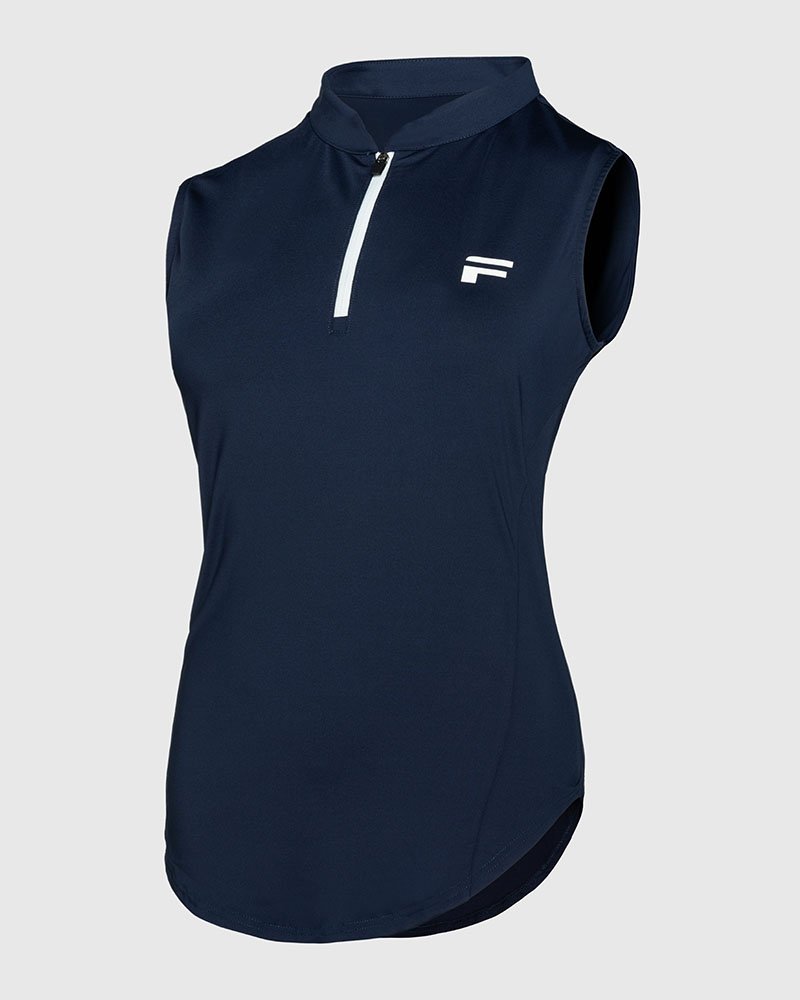
Many new golf apparel brands fail before their first collection even ships. They skip critical steps like fabric testing, fit validation, and production planning. The right approach starts with product validation, not just branding and marketing.
Launching a golf clothing line requires six structured steps: defining your core product range, designing for real golf performance, sourcing quality materials, testing through sampling, planning scalable manufacturing, and building a consistent brand presence. Each step must be completed before moving forward.
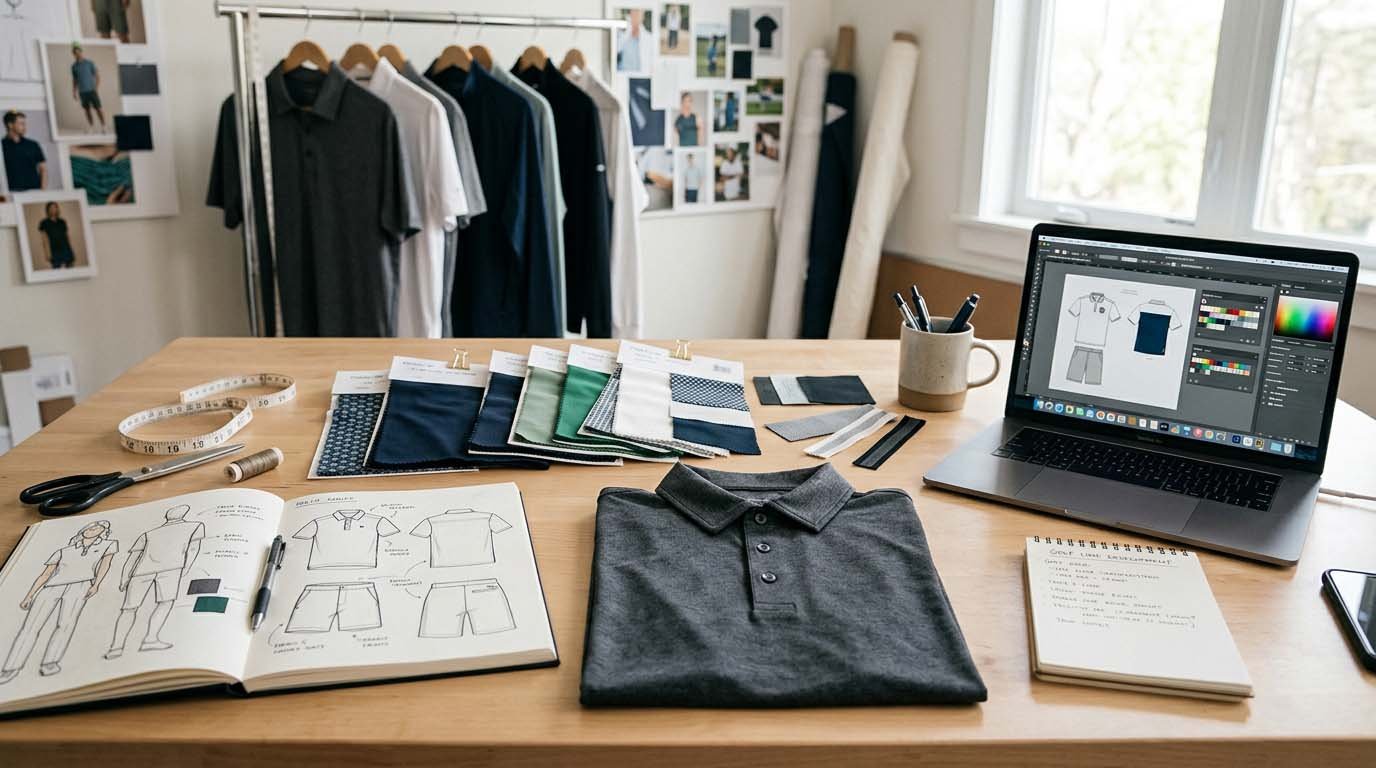
I have worked with dozens of new golf brands at FUWAY, helping them move from initial concepts to finished products. Most of them make the same mistake—they focus on logos and websites before proving their product works. Let me walk you through the real steps that matter.
Quick Answers: Launching Your Golf Clothing Line
Q: What's the minimum order quantity for a golf clothing line?
Most manufacturers require 300-500 pieces per design per color. Starting with 2-3 core styles keeps your initial investment manageable.
Q: How long does it take to launch a golf apparel brand?
From design to delivery, expect 4-6 months including sampling, revisions, bulk production, and shipping.
Q: What fabrics work best for golf apparel?
Polyester-spandex blends (88%-95% polyester, 5%-12% spandex) offer the best balance of breathability, stretch, moisture-wicking, and durability for golf clothing.
Q: How much does it cost to start a golf clothing line?
Initial investment ranges from $15,000 to $50,000 depending on product range, order quantities, fabric choices, and customization level.
Q: Should I design my own patterns or use existing templates?
Start with proven base patterns and customize fit, length, details, and branding. Creating patterns from scratch adds cost and time without guaranteed results.
What's the First Step in Creating a Golf Clothing Line?
The first step is defining your core product range based on real golf use cases, not design trends. Start with 2-4 essential pieces that solve specific on-course needs: a performance polo, a stretch short, and optionally a lightweight jacket or base layer.
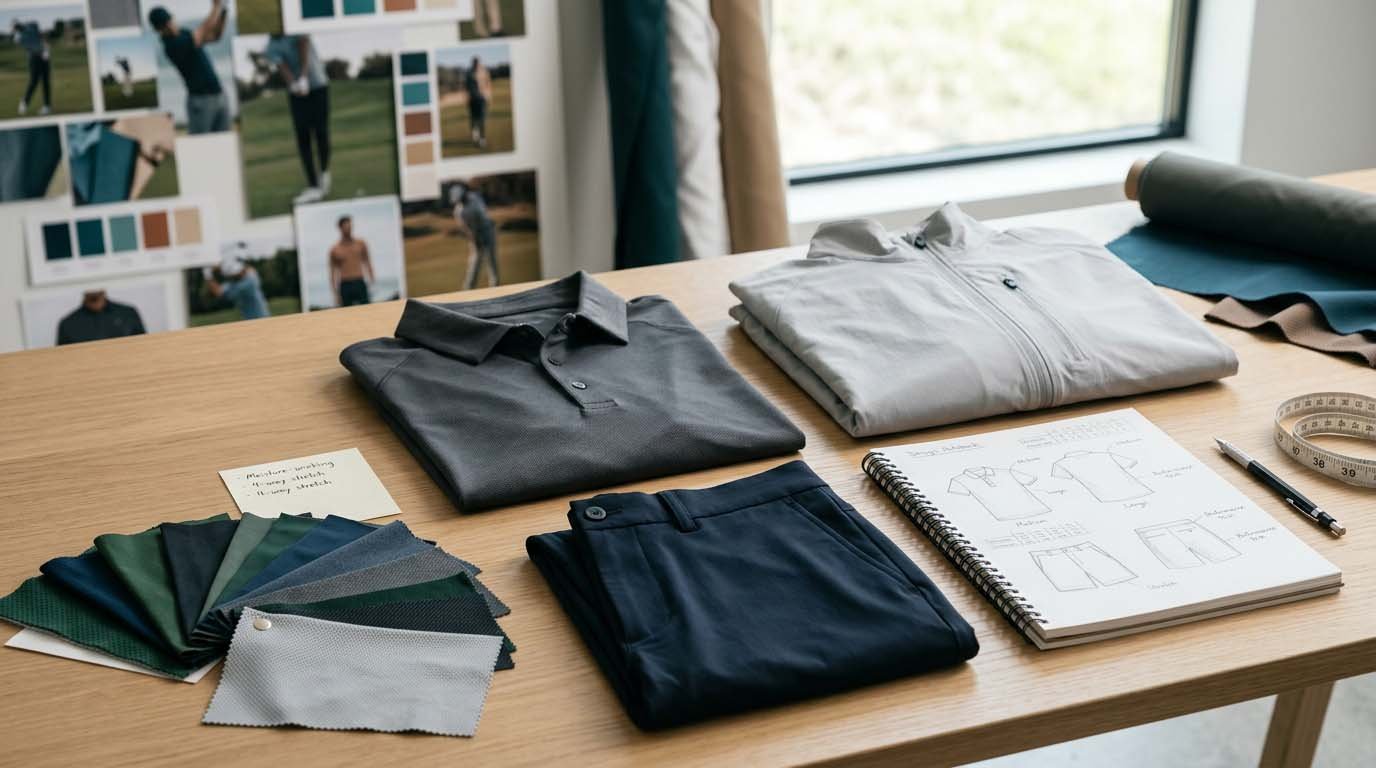
I see new brands making the same mistake over and over. They want to launch with 8-10 different styles across multiple categories right away. This approach burns cash, complicates production, and makes inventory management nearly impossible.
Start With Use-Case Validation
Your first collection is not a full wardrobe—it is a test range to prove three things:
- Fit and comfort: Does your target customer find the fit flattering and movement-friendly?
- Fabric performance: Does the fabric breathe, stretch, wick moisture, and hold its shape after washing?
- Production consistency: Can your manufacturer deliver the same quality across bulk orders?
I always recommend starting with these core pieces:
| Product Type | Why It Matters | Typical MOQ |
|---|---|---|
| Performance Polo | Most-worn item on the course, defines your brand quality | 500 pcs |
| Stretch Golf Short | High repeat-purchase rate, easy to fit-test | 300 pcs |
| Lightweight Jacket | Optional but expands seasonal appeal | 300 pcs |
Focus on one colorway per style in your first run. You can add colors after you validate fit and fabric. Most brands lose money on unsold inventory because they over-expand too early.
How Do You Design Your Golf Apparel?
Design for golf apparel starts with movement patterns, not visual aesthetics. You must account for shoulder rotation, arm extension, bending, and walking in sun exposure. Fit, fabric weight, breathability, and stretch come before graphics and logos.
One of my clients came to me with beautiful sketches but no understanding of raglan sleeves, gussets, or articulated seams. Their first sample looked great on a hanger but restricted movement during a swing. We had to redesign the shoulder and armhole construction.
Golf-Specific Design Requirements
Golf clothing is not the same as gym wear or running gear. The design must support these movements:
- Shoulder rotation: 90-110 degrees during backswing
- Arm extension: Full reach without lifting the hem
- Torso bending: Forward lean during address and putting
- Walking comfort: 4-6 hours of continuous wear in heat or humidity
Your design checklist should include:
- Sleeve construction: Set-in, raglan, or hybrid for unrestricted movement
- Hem length: Long enough to stay tucked or short enough to not ride up
- Collar type: Traditional, Johnny, or mock neck based on brand positioning
- Pocket placement: Functional without adding bulk or restricting motion
- Branding method: Embroidery, heat transfer, woven label, or printed logo
I recommend working with a manufacturer who provides tech packs and spec sheets. These documents define measurements, tolerances, construction details, and material specs so nothing is left to guesswork.
Where Can You Source Quality Materials?
Quality materials for golf apparel come from specialized fabric mills that produce moisture-wicking, UV-protective, and stretch-integrated textiles. Work with manufacturers who maintain relationships with vetted suppliers and can provide fabric swatches, performance test data, and wash-durability reports.
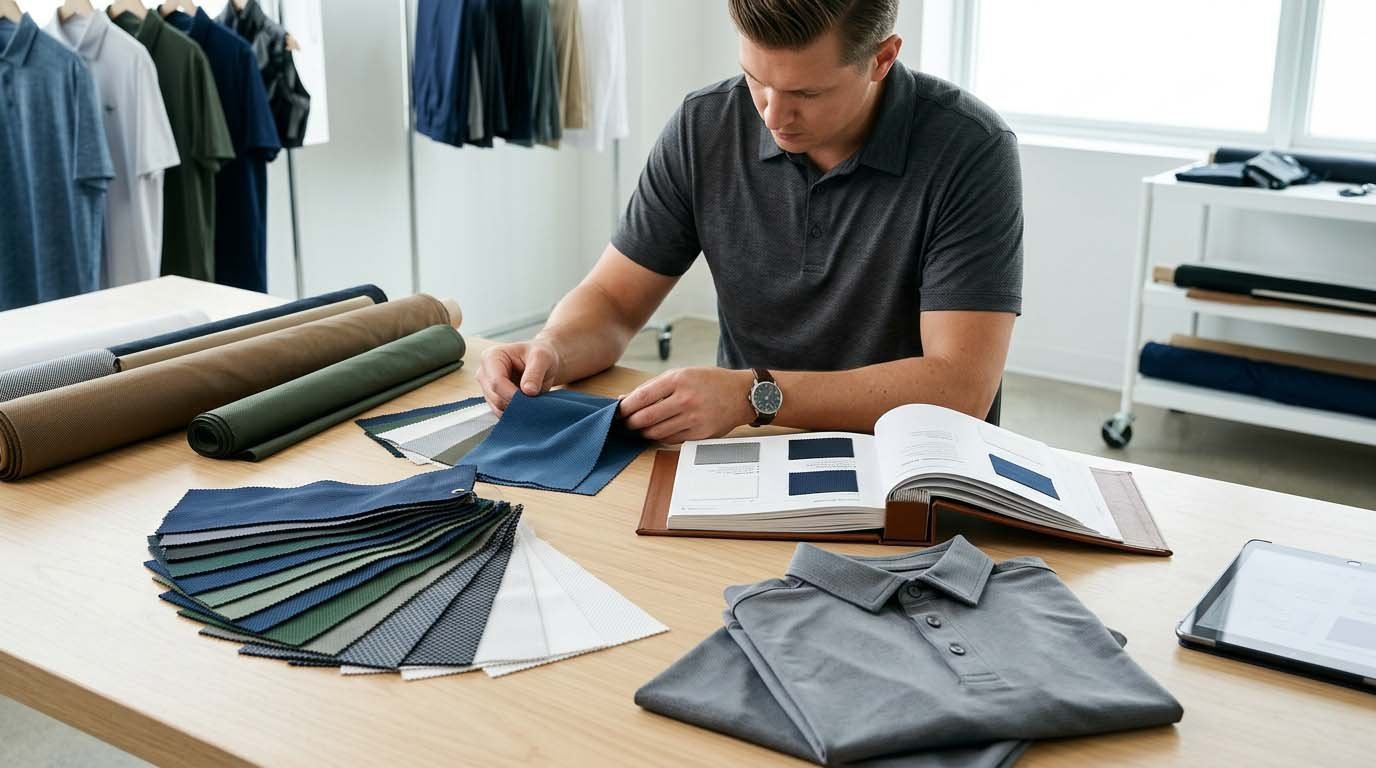
I have seen brands waste thousands of dollars ordering fabric directly from online mills without understanding GSM weight, hand feel, recovery rate, or colorfastness. Fabric selection is not about finding the cheapest price per meter—it is about matching performance to use case.
Key Fabric Properties for Golf Apparel
| Property | Why It Matters | Recommended Range |
|---|---|---|
| Stretch | Allows unrestricted movement | 15%-30% in both directions |
| Moisture-wicking | Keeps skin dry during play | Rated for moderate to high activity |
| UV Protection | Prevents sun damage | UPF 30-50+ |
| Weight | Affects breathability and drape | 140-180 GSM for polos, 200-240 GSM for outerwear |
| Pilling resistance | Maintains appearance after washing | Grade 3-4 or higher |
When I work with new brands, I provide fabric sample books organized by performance category. This lets you feel the fabric, test stretch, and compare options side-by-side before committing to bulk orders.
Fabric Testing Before Bulk Production
Do not skip this step. Request the following from your supplier:
- Swatches in actual colors (not just lab samples)
- Wash test results: Does the fabric shrink, fade, or lose stretch?
- Handfeel comparison: Does it feel premium or cheap against the skin?
- Stretch recovery: Does it return to shape after repeated stretching?
One of my clients insisted on a specific fabric they found online. After sampling, it felt stiff and did not recover after washing. We switched to a polyester-spandex jersey with mechanical stretch at a similar price point, and their customers loved the final product.
What Are the Best Practices for Manufacturing Your Apparel?
Manufacturing golf apparel requires consistent sample validation, clear size grading, quality control checkpoints, and alignment between sample and bulk production. The best practice is treating sampling as a development process, not a formality, and working with manufacturers who support small-batch testing before scaling.
This is where most new brands lose control. They approve a sample based on photos, place a bulk order, and receive finished goods that do not match. I have fixed this problem dozens of times, and the solution is always the same: structured sampling and production planning.
The Three-Stage Sampling Process
Do not skip any of these stages:
- Proto sample: Tests basic construction, fabric drape, and fit proportions
- Pre-production sample: Confirms final fabric, trims, branding, size grading, and finishing
- Top-of-production sample: First piece off the bulk production line for final approval
Each stage catches different issues. The proto sample shows if your design works. The pre-production sample confirms all details match your spec. The top-of-production sample ensures the factory executes correctly at scale.
Size Grading and Fit Validation
Your size chart must reflect your target customer's body type. I recommend:
- Start with 3 sizes: Small, Medium, Large
- Fit-test on real people: Not just fit models
- Document tolerance ranges: ±0.5 inches for critical measurements
- Grade proportionally: Do not just scale up or down evenly
One brand I worked with used a size chart from another sport. Their Medium fit like a Large, and they had to re-cut and re-sew over 800 pieces. That mistake cost them $12,000 and delayed their launch by six weeks.
Quality Control Checkpoints
Your manufacturer should provide:
- Inline inspection: Checking garments during production
- Final inspection: Before packing and shipping
- AQL standards: Acceptable Quality Limit based on order size
- Photo reports: Documenting any defects or deviations
At FUWAY, we use a 4-point inspection system for all bulk orders. This catches stitching errors, fabric defects, trim misalignment, and finishing issues before goods leave the factory.
How Do You Build and Promote Your Brand?
Building a golf apparel brand requires consistent visual identity, product-focused storytelling, early customer feedback loops, and strategic launch timing. Promote through golf communities, influencer partnerships, course events, and content that demonstrates fabric performance and fit benefits, not just lifestyle imagery.
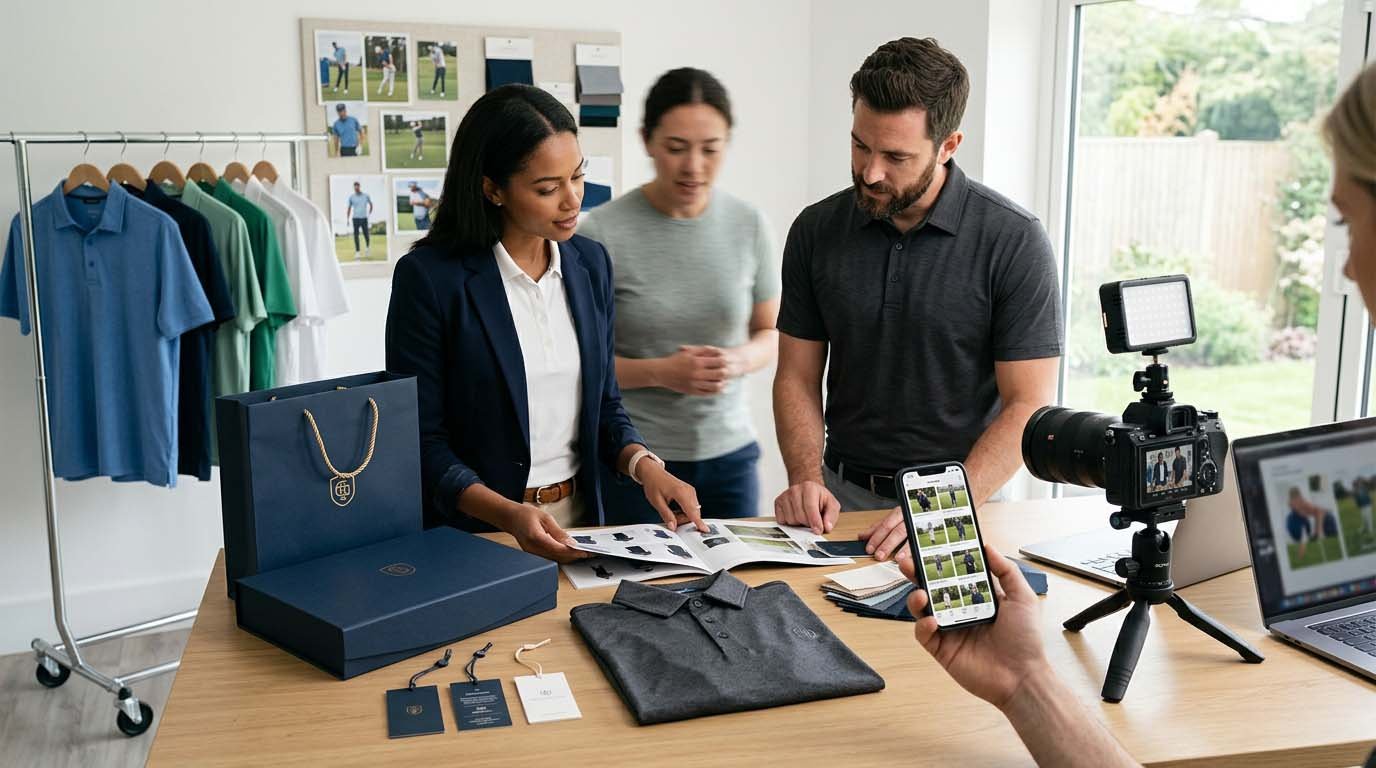
I am not a marketing expert, but I have helped brands prepare for launch by ensuring their product story aligns with what they can actually deliver. Your brand is only as strong as your product quality and customer experience.
Brand Foundation Elements
Before you start promoting, lock down these elements:
- Brand name and logo: Simple, memorable, golf-relevant
- Tagline or positioning statement: What problem do you solve?
- Visual identity: Colors, fonts, photography style
- Sizing and care instructions: Clear, professional, accurate
Your packaging matters too. I have seen brands use cheap poly bags that make a $65 polo feel like a $15 product. Invest in branded packaging, hang tags, and care labels that reinforce your quality positioning.
Pre-Launch Testing Strategy
Do not wait until you have 1,000 units in inventory to test customer response. Use these tactics:
- Send samples to golfers in your network: Get honest feedback
- Run a pre-order campaign: Validate demand before bulk production
- Partner with local courses or clubs: Offer team discounts or co-branded items
- Create behind-the-scenes content: Show fabric selection, sampling, and production
One of my clients ran a 100-piece test run before their official launch. They discovered their sizing ran small and adjusted the grade before producing their main inventory. That small test saved them from a costly return problem.
What Are the Key Steps to Launching Your Golf Clothing Line?
The key steps are: define your core range, design for movement and performance, source validated fabrics, complete structured sampling, plan scalable manufacturing, and build brand presence through product-first storytelling. Each step must be proven before moving forward.
Let me summarize the full process based on what I have seen work consistently:
Launch Roadmap: From Concept to Market
| Phase | Action Items | Timeline | Cost Range |
|---|---|---|---|
| Planning | Define product range, target customer, budget | 2-4 weeks | $500-$2,000 |
| Design | Create tech packs, select fabrics, finalize branding | 4-6 weeks | $2,000-$5,000 |
| Sampling | Proto, pre-production, and TOP samples | 6-8 weeks | $500-$1,500 |
| Production | Bulk manufacturing and quality control | 6-8 weeks | $10,000-$40,000 |
| Logistics | Shipping, customs, warehousing | 2-4 weeks | $1,000-$3,000 |
| Launch | Brand setup, marketing, sales channels | Ongoing | Variable |
What New Brands Should Not Do
Based on my experience, avoid these common mistakes:
- Over-designing your first collection: Stick to proven styles
- Skipping fit testing: Always validate on real people
- Choosing suppliers by price alone: Consistency matters more than cost
- Ordering too many SKUs or colors: Start small and expand based on data
- Ignoring production lead times: Factor in delays and plan backwards from launch date
I have worked with brands that did everything right and brands that rushed every step. The ones that succeed treat their first collection as a product validation project, not a branding exercise.
Conclusion
Launching a golf clothing line takes structured planning, product validation, and manufacturing discipline. Start with core pieces, test thoroughly, and scale based on real customer feedback. Quality and consistency build brands that last.