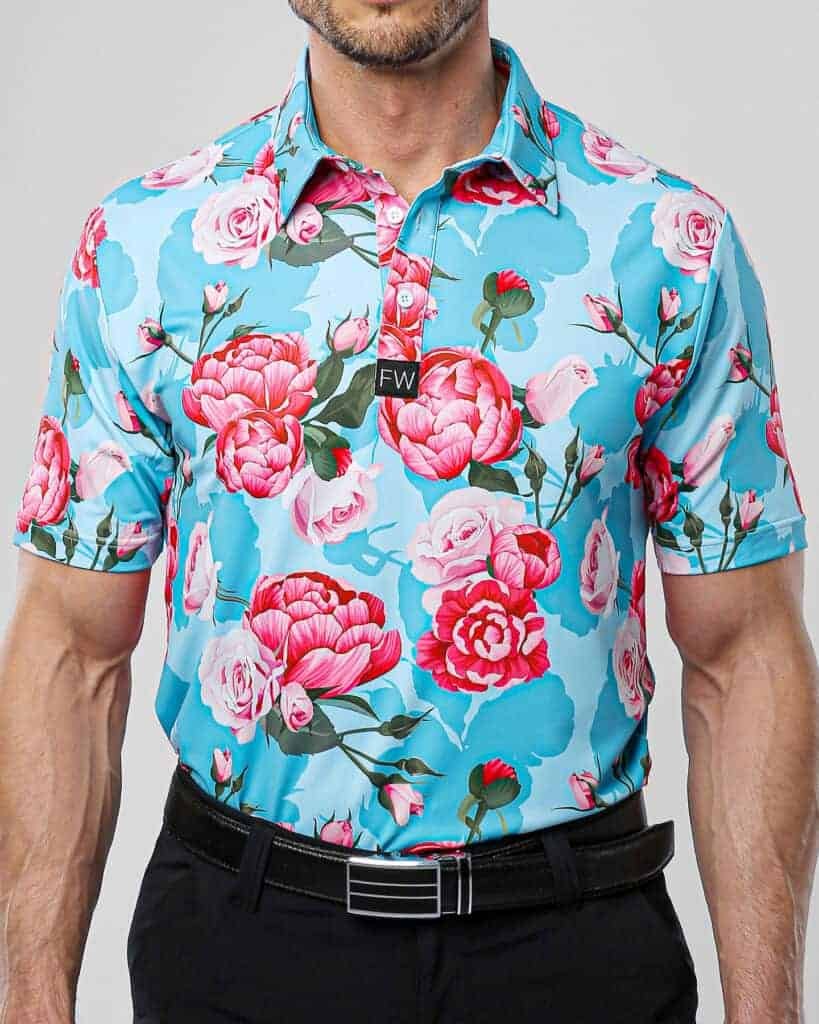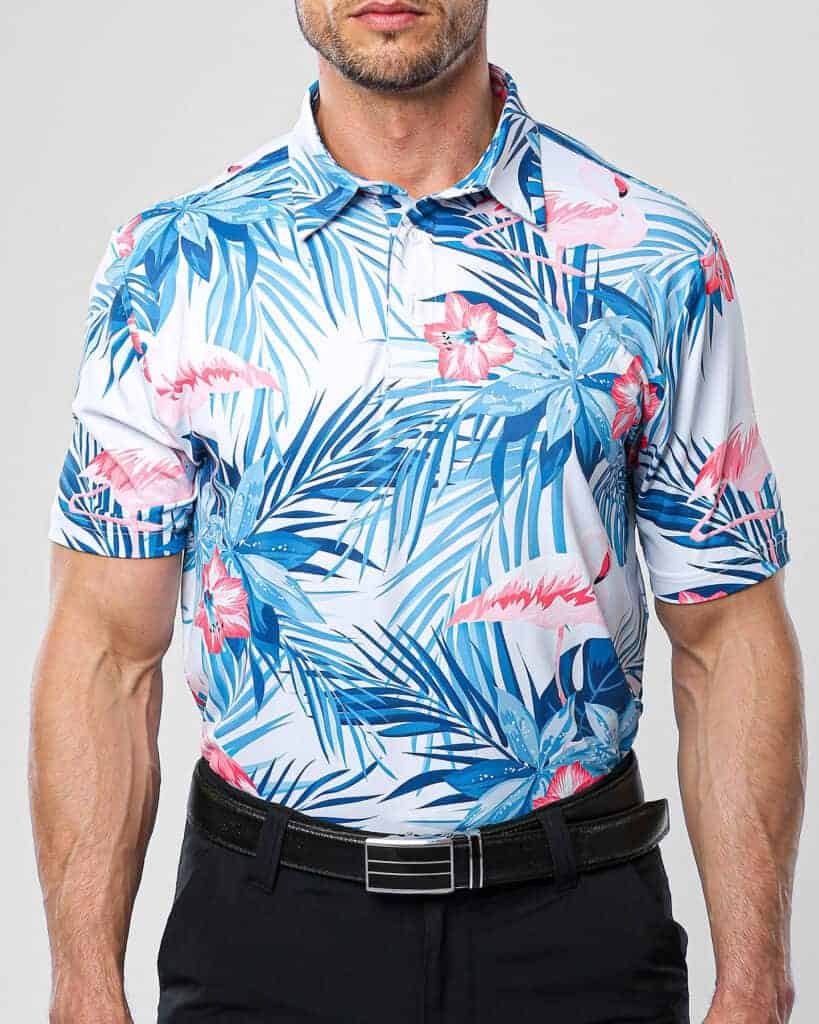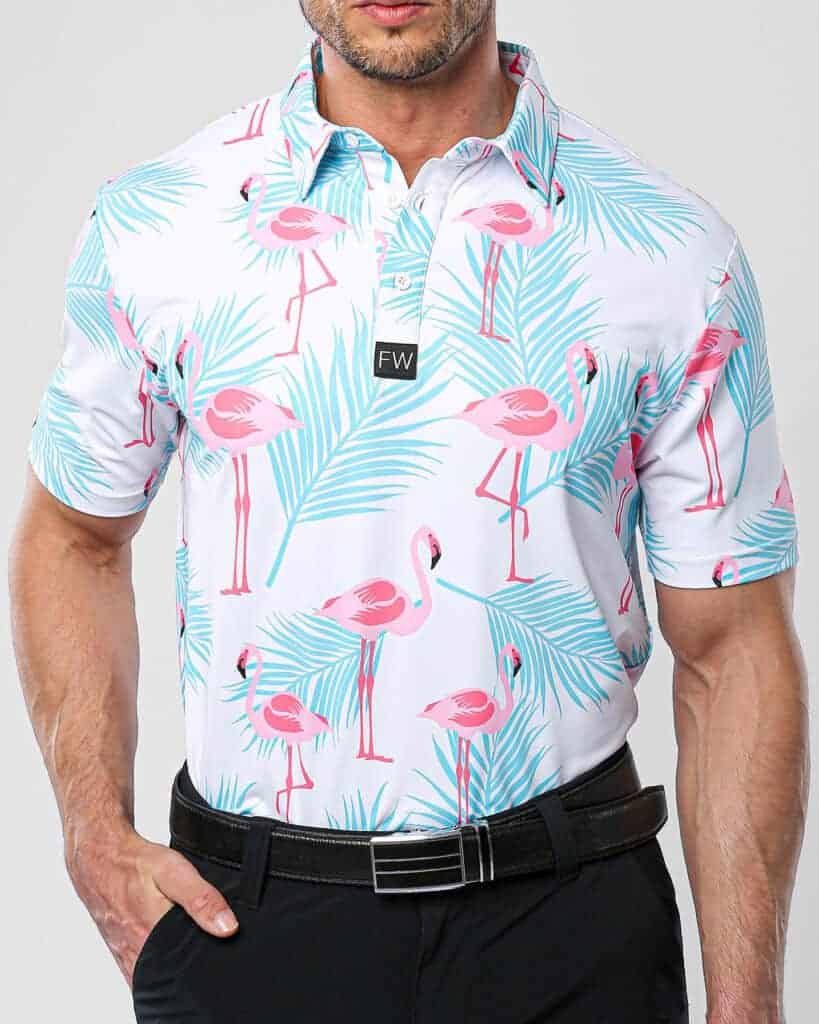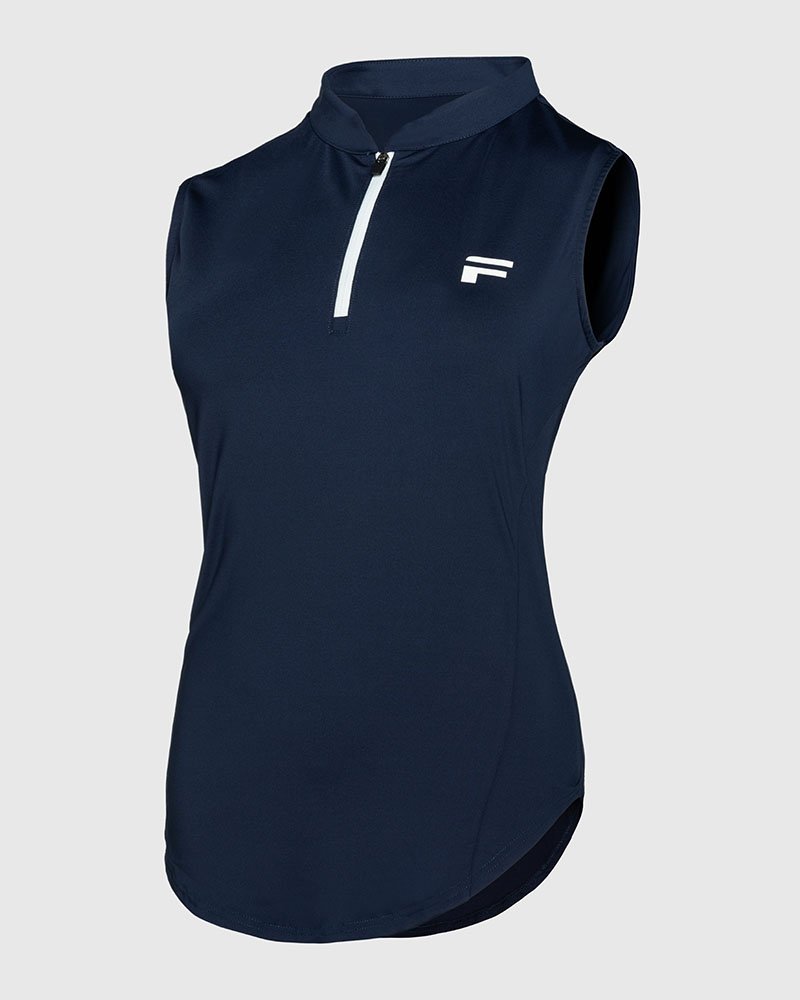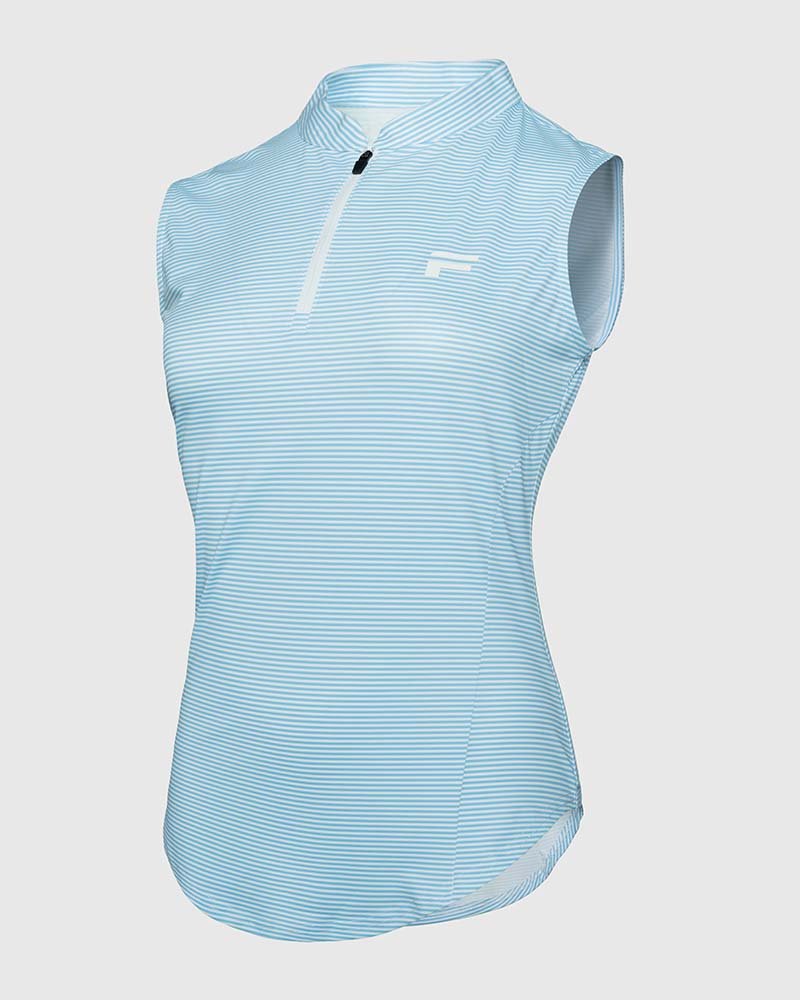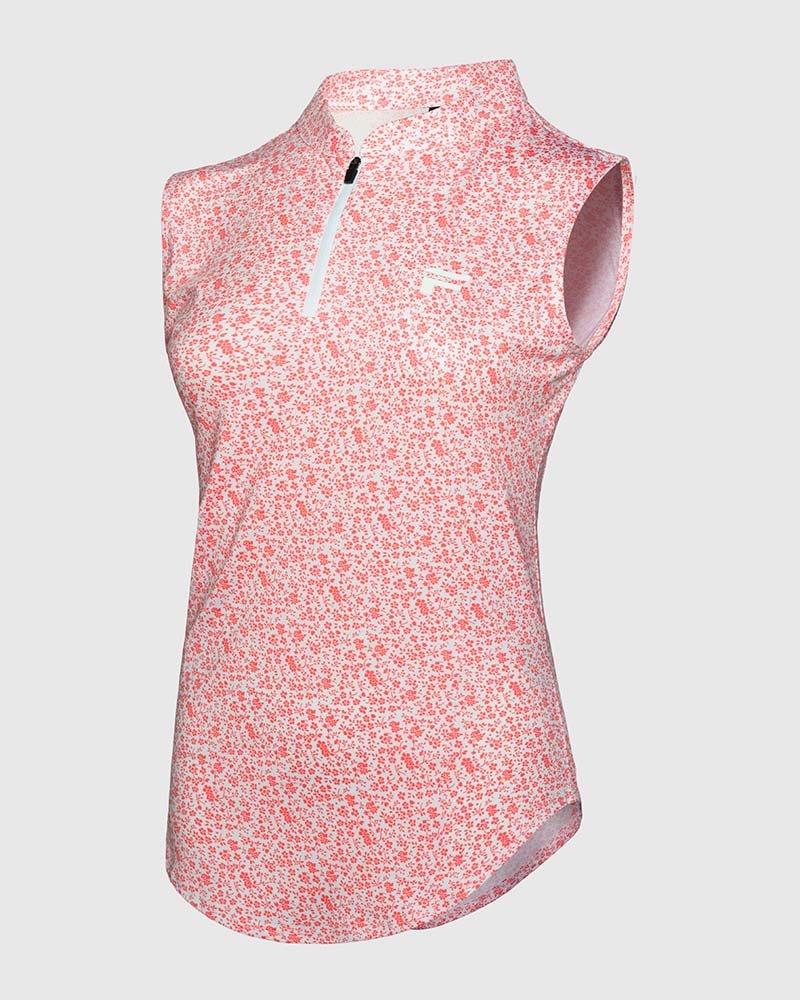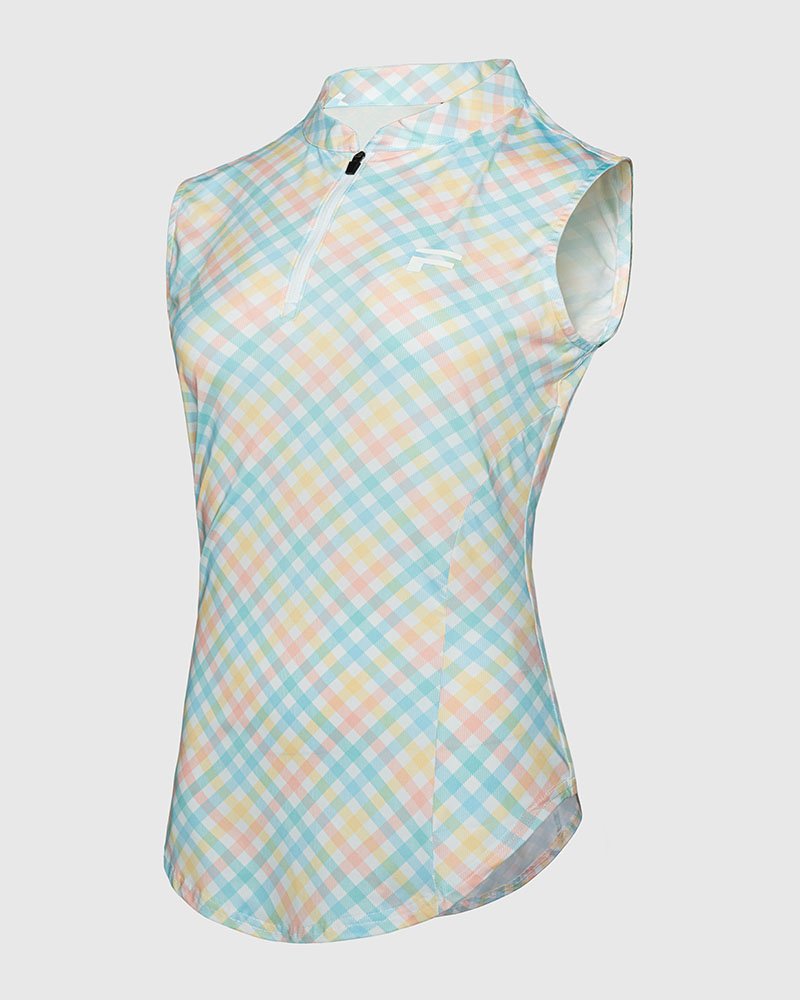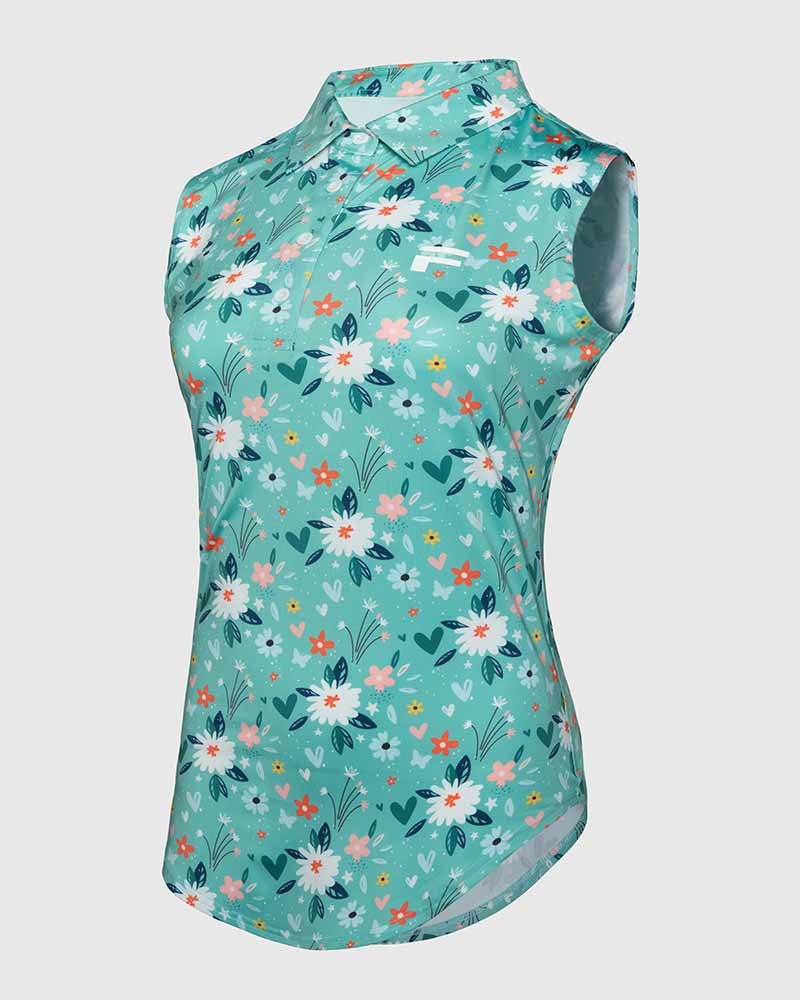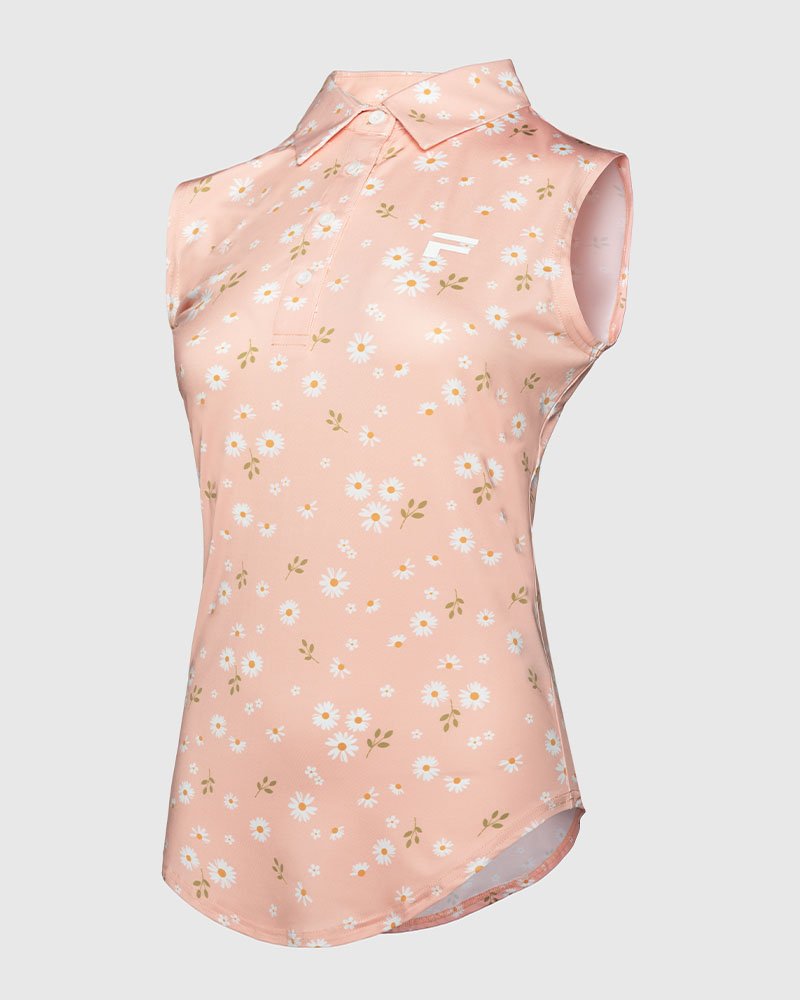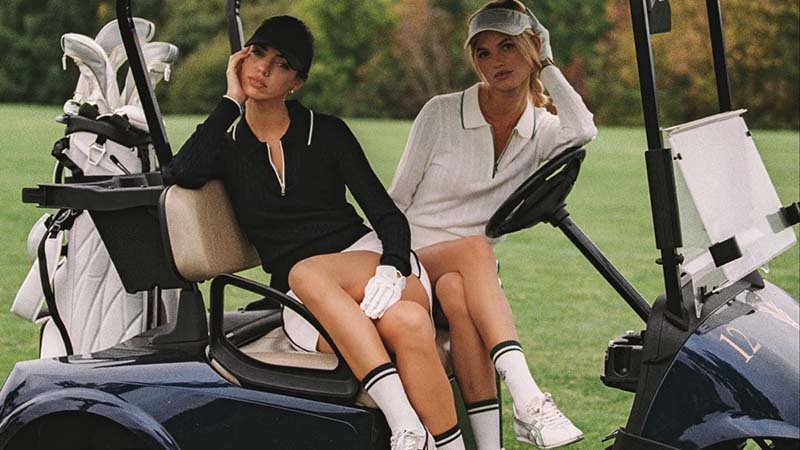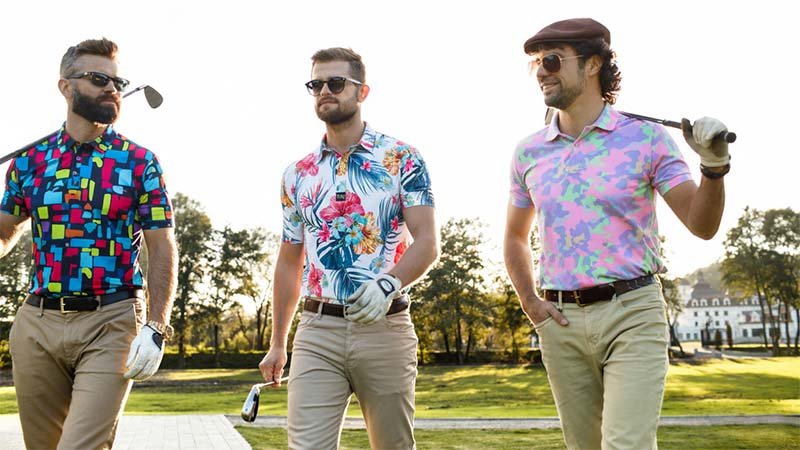
Choosing the right colors and styles for golf polo shirts depends on target customer profile, golf setting, climate, fit preference, and brand positioning. For most golf apparel collections, classic colors such as navy, white, black, and light blue form the core assortment, while seasonal colors, contrast details, and modern fits help differentiate the line.
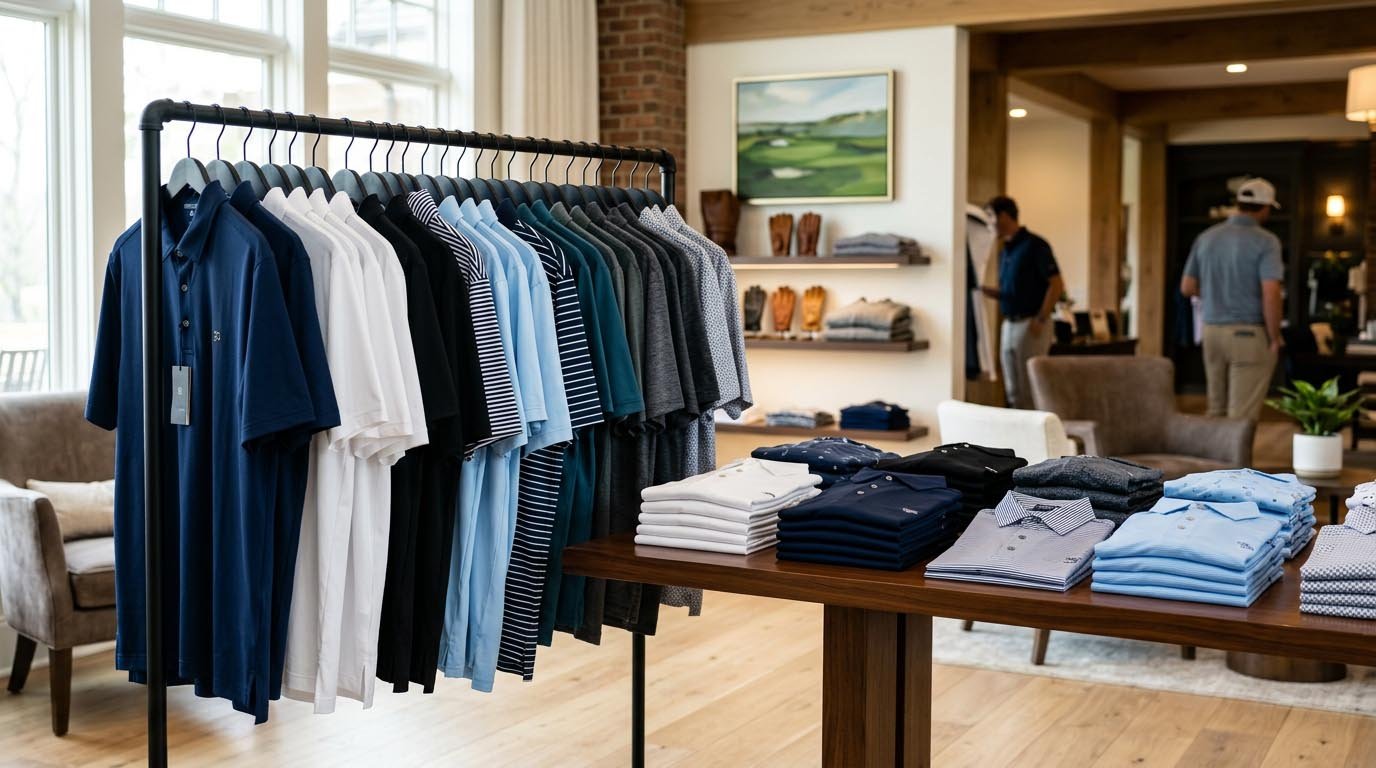
For golf apparel brands, color and styling decisions affect more than appearance. They also influence sell-through rate, SKU complexity, MOQ planning, fabric selection, and reorder efficiency. A well-planned golf polo collection is easier to produce, easier to merchandise, and more likely to perform consistently across seasons.
This guide explains how to choose golf polo shirt colors, styling options, fit direction, and collection structure, with practical advice for brands developing custom or private label golf apparel.
Quick Answers: Golf Polo Shirt Colors and Styling
What are the best colors for golf polo shirts?
For most brands, the best-selling core colors are usually navy, white, black, and light blue. These colors work across different golf settings and are easier to match with shorts, pants, and layers.
How many colors should a new golf polo collection launch with?
A new brand often starts with 5 to 7 core colors. This gives enough variety without creating too many SKUs or increasing inventory risk too early.
What styles work best for golf polo shirts?
The most practical options are usually classic fit, regular fit, and athletic fit, combined with performance features such as moisture-wicking fabric, stretch, collar stability, and side vents.
Should golf apparel brands use trendy colors?
Yes, but usually in moderation. Many collections perform better when classic colors lead the assortment and trend-driven shades are added as limited or seasonal options.
How do colors affect golf polo manufacturing?
Color planning affects fabric sourcing, MOQ, dyeing, trimming coordination, inventory balance, and reorder flexibility. Too many colors can make production and stock planning more difficult.
Why Colors and Styling Matter in Golf Polo Shirt Development
Colors and styling are not only design decisions. In golf apparel, they directly influence:
- product positioning
- target customer perception
- ease of outfit matching
- inventory management
- seasonal relevance
- collection consistency
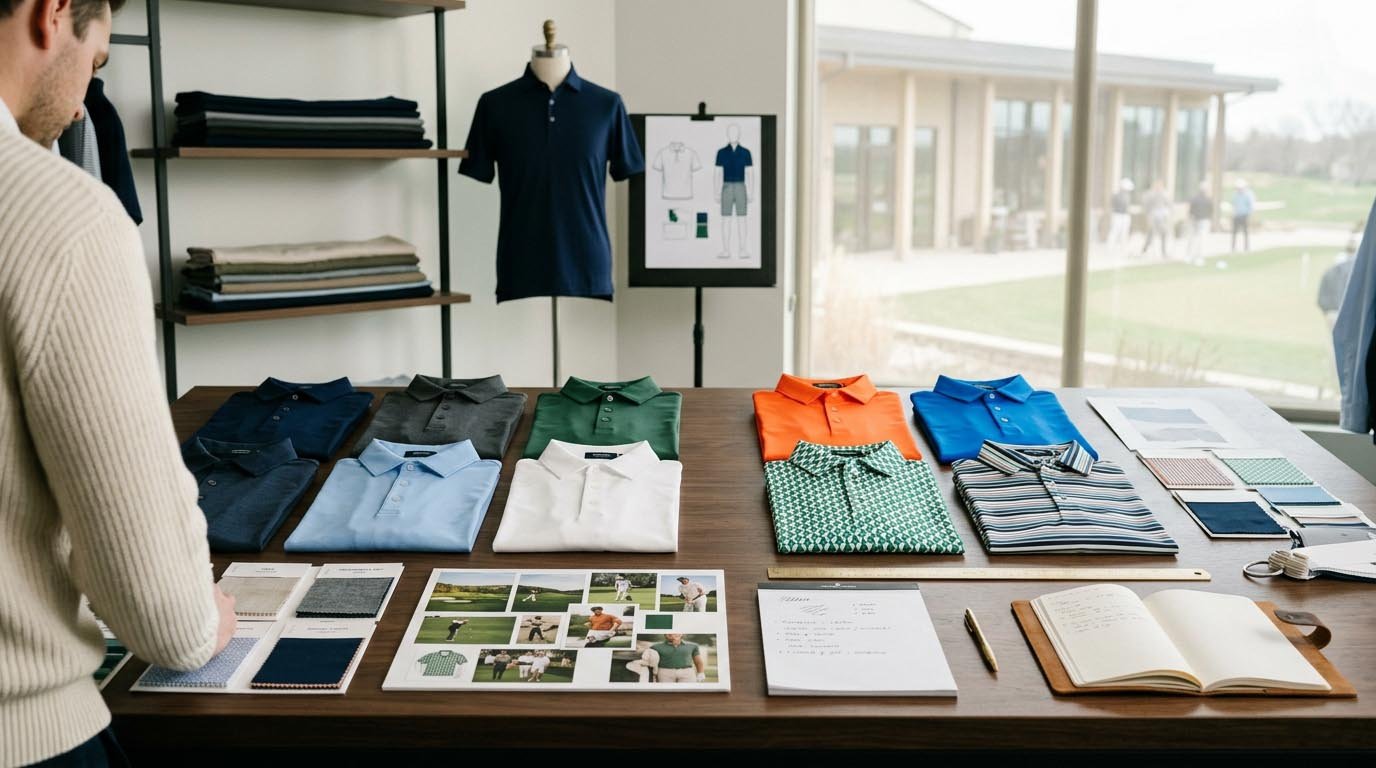
For example, a collection built around classic country club aesthetics usually relies on cleaner styling and conservative colors. A collection aimed at younger or more performance-focused golfers may include bolder color accents, athletic fits, and more technical fabric choices.
From a manufacturing and merchandising perspective, color and style choices also affect:
| Decision Area | Impact on Product Development |
|---|---|
| Core colors | Easier reorders and stronger long-term sales stability |
| Seasonal colors | Helps refresh the collection but increases SKU complexity |
| Fit direction | Affects pattern development and target customer match |
| Styling details | Can raise perceived value but may increase cost |
| Fabric choice | Influences comfort, performance, drape, and price |
| Collection size | Determines inventory pressure and MOQ planning |
For brands launching a new golf apparel line, choosing the right color and style mix early can reduce unnecessary product risk.
Best Core Colors for Golf Polo Shirts
For most golf polo collections, the safest core color group includes:
- navy
- white
- black
- light blue
- grey
- soft green or muted olive in some collections
These colors tend to work well because they are:
- easy to match with golf bottoms
- accepted across different golf environments
- suitable for repeated seasonal use
- easier to position across age groups
Why navy, white, and light blue remain strong choices
These shades are widely used in golf apparel because they balance tradition, versatility, and clean presentation. They work for:
- private clubs
- resort golf
- corporate golf events
- teamwear programs
- retail collections
They also pair well with common bottom colors such as:
- khaki
- stone
- navy
- black
- grey
- white
When black works well
Black can look clean and premium, especially in modern or performance-driven collections. However, some brands use it more selectively in hotter climates because darker shades may feel less seasonally appropriate for peak summer positioning.
Should a new brand rely heavily on trend colors?
Usually not. A strong first collection is often built around a stable core color base, with trend colors added later once demand patterns are clearer.
How to Choose Golf Polo Colors by Target Market
The best golf polo color strategy depends on who the collection is for.
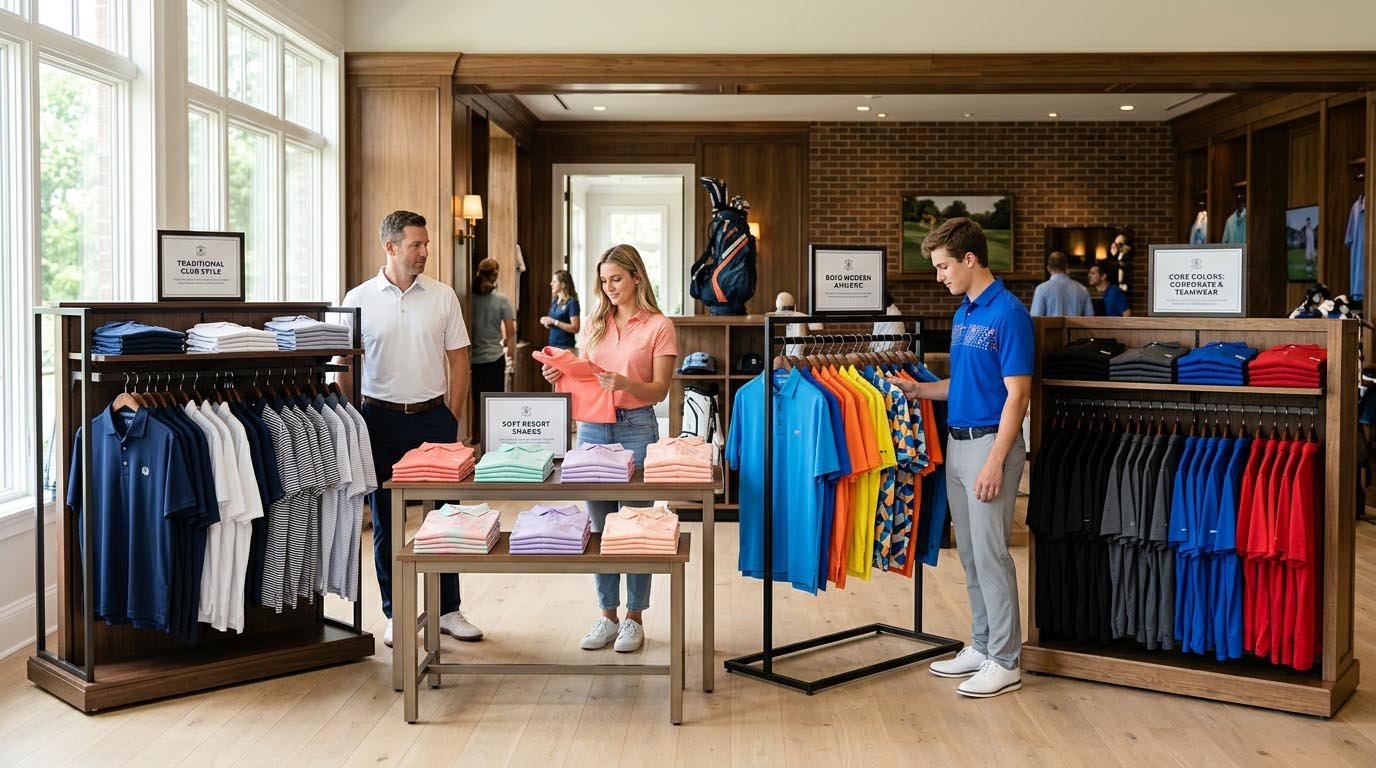
1. Private club and traditional golf market
If the collection is aimed at more traditional golf settings, color planning usually leans toward:
- navy
- white
- light blue
- burgundy
- forest green
- subtle stripe combinations
These customers often prefer a polished look over high-contrast fashion statements.
2. Resort and destination golf market
For resort-oriented golf collections, brands can often introduce more relaxed and seasonal shades, such as:
- coral
- mint
- sky blue
- soft yellow
- washed pink
- tropical-inspired combinations in moderation
These colors often work well when the product is positioned around leisure, travel, and warm-weather play.
3. Younger and more athletic golf customers
For a younger customer profile, brands may consider:
- brighter blue tones
- modern green shades
- cleaner monochrome programs
- contrast plackets
- bolder trims or logo accents
However, even for younger markets, it is still useful to keep enough neutral styles in the collection to support easier everyday wear.
4. Corporate, teamwear, and event golf apparel
If the collection targets company events, clubs, tournaments, or teamwear programs, color planning should focus on:
- logo compatibility
- broad wearability
- easy size replenishment
- consistent repeat ordering
In these cases, standard core colors often perform better than fashion-driven shades.
How Climate and Season Affect Golf Polo Color Choices
Climate has a strong effect on which golf polo colors feel practical and marketable.
| Climate or Season | Common Color Direction |
|---|---|
| Spring | Soft blues, whites, fresh greens, light neutrals |
| Summer | White, light blue, mint, pale grey, airy bright tones |
| Fall | Navy, burgundy, olive, charcoal, deeper accents |
| Warm climates | Lighter and fresher colors often feel more suitable |
| Cooler climates | Darker and richer shades may feel more natural seasonally |
Brands selling into hot-weather regions often emphasize lighter tones because they align better with seasonal demand and visual expectations. Collections intended for multiple markets may need a more balanced mix of light and dark colors.
How Many Colors Should a New Golf Apparel Brand Launch With?
A new brand does not always benefit from launching too many colors at once.
For most first collections, a practical structure is:
- 3 to 4 core best-selling colors
- 1 to 2 supporting colors
- 1 limited or seasonal color
This often creates a total of 5 to 7 colors, which is usually enough to show variety without making inventory management too difficult.
Why too many colors can hurt a new collection
Launching with too many shades may lead to:
- weak order depth per color
- more difficult MOQ planning
- slower inventory turnover
- complicated photography and merchandising
- more restocking imbalance
For custom golf polo development, each additional color can also affect:
- fabric sourcing
- color approval
- trim matching
- packaging complexity
- production scheduling
A tighter assortment is often easier to manage and scale.
What Styling Options Work Best for Golf Polo Shirts?
Besides color, styling has a major influence on customer acceptance and brand identity.
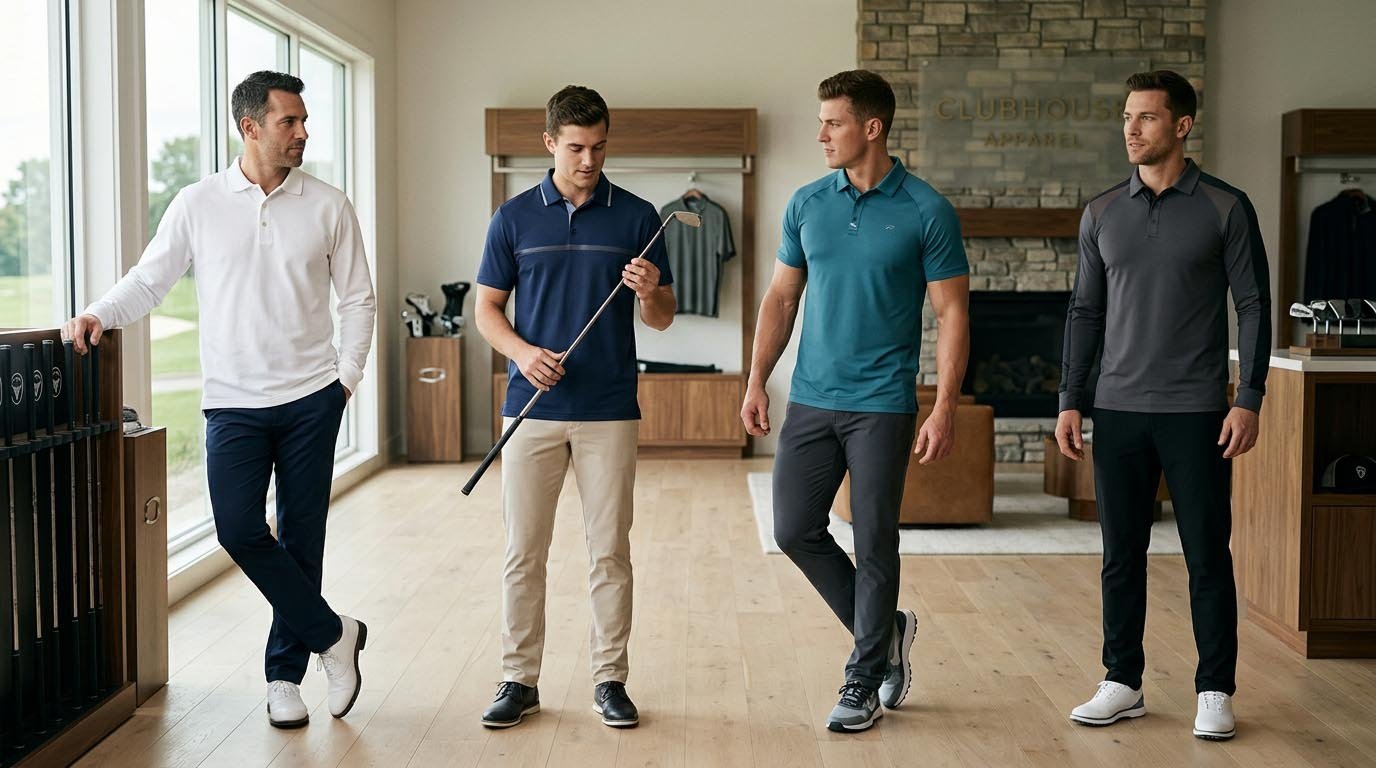
The most common style directions include:
Classic fit golf polos
Classic fit styles usually offer:
- slightly roomier body shape
- traditional silhouette
- comfortable range of motion
- broad age-group appeal
This is often the safest fit direction for traditional golf customers and versatile retail collections.
Regular fit golf polos
Regular fit sits between classic and athletic styling. It is often a good choice for brands that want a clean modern look without becoming too narrow.
Athletic fit golf polos
Athletic fit styles usually have:
- a more shaped body
- slightly trimmer sleeves
- cleaner shoulder and chest profile
- stronger performance positioning
These are often used in collections aimed at younger golfers or more active players.
Long sleeve vs short sleeve golf polos
Most collections lead with short sleeve styles, but long sleeve options can be valuable for:
- spring and fall programs
- UV-oriented products
- layering collections
- cooler weather golf markets
Key Styling Details That Influence Product Appeal
A golf polo may look similar at first glance, but styling details often separate entry-level products from better-positioned collections.
Collar construction
A good collar should:
- hold shape after washing
- sit neatly when worn open or buttoned
- match the intended style level
Common collar directions include:
- self-fabric collar
- rib collar
- contrast tipped collar
- jacquard collar in premium styles
Placket design
The placket can be simple or more branded. Brands may choose:
- standard front placket
- hidden placket
- contrast inner placket
- buttonless or zip polo variations in fashion collections
Sleeve finishing
Sleeves can be finished with:
- clean hem
- rib cuff
- contrast cuff tipping
These details affect whether the product feels more classic, sporty, or fashion-led.
Hem design
Split side vents are common in golf polos because they improve movement and help the shirt sit better when tucked or untucked.
Branding placement
Logo position should be planned carefully. Common placements include:
- left chest
- sleeve
- upper back neck
- lower side seam label
Too much branding can reduce versatility, especially for customers who want golf polos to work both on and off the course.
Performance Features vs Lifestyle Styling
Many brands developing golf polos need to balance technical performance with everyday wearability.
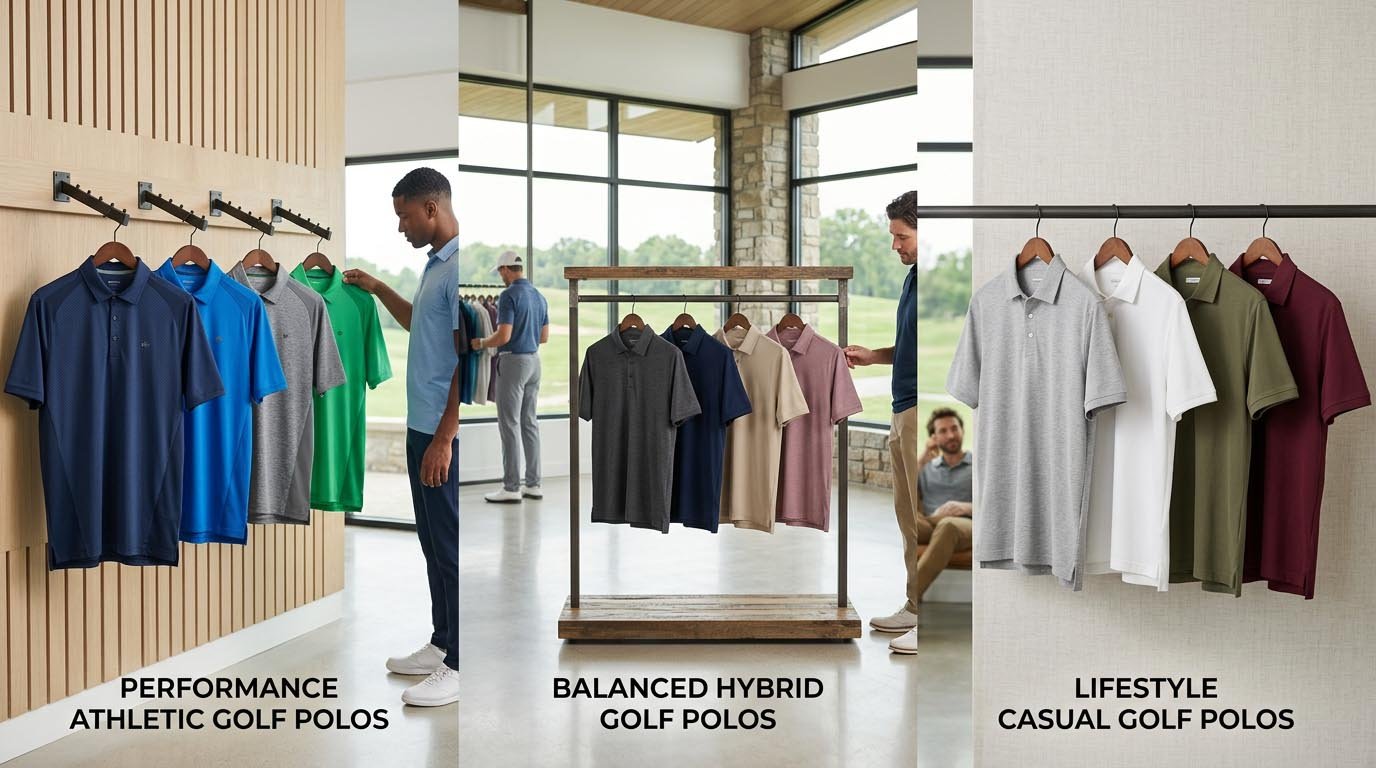
Performance-focused golf polos often include:
- moisture-wicking fabric
- stretch construction
- UV protection
- lighter fabric weight
- ventilation features
- athletic fit
Lifestyle-focused golf polos often emphasize:
- softer hand feel
- cleaner structure
- versatile color palette
- traditional silhouette
- easy pairing with casual bottoms
Hybrid styles are often the most practical
For many brands, the best option is a hybrid golf polo that combines:
- performance fabric
- classic or regular fit
- subtle styling detail
- broad cross-occasion wearability
This approach often makes the product easier to sell to a wider customer base.
How to Match Golf Polo Shirts with Bottoms and Layers
Even when designing a collection for wholesale or private label use, it helps to think in terms of outfit coordination.
Polo colors that are easy to pair
The most commercially practical polo colors are usually the ones that match well with common golf bottoms.
| Polo Color | Easy Bottom Matches |
|---|---|
| Navy | Khaki, stone, grey, white |
| White | Almost all standard golf bottom colors |
| Light Blue | Navy, khaki, grey, white |
| Black | Grey, black, khaki |
| Grey | Black, navy, white, stone |
| Soft Green | Khaki, navy, light stone |
Why outfit matching matters
If a polo is easy to pair with:
- golf shorts
- golf pants
- quarter-zips
- vests
- outerwear
it usually becomes easier to merchandise and reorder.
Layering considerations
Golf polos are often worn under:
- quarter-zip pullovers
- lightweight jackets
- golf vests
- rain layers
This is another reason neutral and adaptable colors remain strong performers.
How Fit Strategy Should Match Customer Demographics
Fit direction should reflect who the brand is trying to serve.
| Customer Group | Common Fit Preference | Typical Style Direction |
|---|---|---|
| Traditional golfers | Classic or regular fit | Clean, conservative styling |
| Younger golfers | Regular or athletic fit | Modern, technical styling |
| Resort and travel customers | Regular fit | Relaxed and versatile styling |
| Premium lifestyle customers | Clean tailored fit | Refined details and elevated fabric |
A fit that works for one audience may not work for another. That is why brands should define target customer profile before finalizing patterns and grading.
Common Mistakes When Choosing Golf Polo Colors and Styles
1. Launching too many colors
Too many colors at the beginning often create excessive SKU pressure and make reorders harder to manage.
2. Ignoring core best-sellers
Some brands over-focus on seasonal colors and underinvest in staple shades such as navy and white.
3. Choosing colors that do not match the market
A palette that works in resort retail may not work in a private club program or corporate order.
4. Over-designing the polo
Too many contrast details, trims, or logo placements can make the shirt feel less versatile and reduce broader market appeal.
5. Picking the wrong fit for the customer
Even strong colors may underperform if the fit feels too slim, too boxy, or out of line with the intended market.
6. Forgetting manufacturing implications
Each style detail and color decision can affect:
- MOQ
- trim matching
- sampling time
- lead time
- production cost
How Color and Style Planning Affect MOQ and Manufacturing
For brands developing custom golf polo shirts, color and styling decisions directly affect production feasibility.
More colors usually mean:
- more fabric planning
- higher complexity in cutting and sewing management
- more trim coordination
- increased stock fragmentation
More styling details may mean:
- more sampling rounds
- more sewing operations
- more QC checkpoints
- higher unit cost
- longer production lead time
This does not mean brands should avoid detail. It simply means every design choice should support a clear product and sales strategy.
OEM vs Private Label Golf Polo Development
Many brands deciding on colors and styling also need to choose between OEM and private label development.
| Type | Best For | Color and Style Flexibility | Development Speed |
|---|---|---|---|
| OEM | Brands wanting more product control | Higher | Longer |
| Private Label | Faster market entry using existing styles | Medium | Faster |
| ODM | Brands using factory-developed styles with some changes | Medium | Moderate |
OEM works best when:
- the brand wants specific fit or styling
- custom colors are important
- long-term product differentiation matters
Private label works best when:
- speed is more important
- the collection needs lower development risk
- the brand is testing the market first
Practical Checklist for Choosing Golf Polo Colors and Styles
Before finalizing a golf polo collection, confirm the following:
- Who is the target customer?
- Is the collection aimed at clubs, retail, resort, teamwear, or DTC sales?
- Which 3 to 4 colors are the core best-sellers?
- Which colors are seasonal or limited?
- Will the fit be classic, regular, or athletic?
- What performance features are truly necessary?
- Which styling details add value without making the product too complicated?
- How many SKUs can the business realistically manage?
- Will the colors coordinate with shorts, pants, and layers?
- Do the selected colors match the target market's climate and usage habits?
A clear checklist helps brands avoid launching collections that look good in concept but become difficult to sell or manage.
Final Thoughts
Choosing the best colors and styles for golf polo shirts requires balancing market demand, product identity, fit direction, manufacturing practicality, and long-term collection planning.
For most golf apparel brands, the most reliable strategy is to:
- build the collection around proven core colors
- keep the first assortment focused
- align fit and styling with target customer expectations
- use trend colors selectively
- make sure every design choice supports both merchandising and manufacturing
A well-structured golf polo collection is easier to launch, easier to reorder, and more likely to create repeat customers over time.