Cost planning is one of the most important steps before launching a golf apparel brand. Your budget affects product range, fabric selection, sampling, MOQ, packaging, logistics, and launch timing. For many new brands, the challenge is not only knowing how much money is needed, but also knowing how to allocate that budget correctly.
Many startup golf apparel brands plan an initial budget between $10,000 and $50,000, depending on product range, order quantity, fabric quality, customization level, packaging, and marketing needs. The largest cost is usually the first production order, followed by product development, branding, website setup, logistics, and launch marketing.
A successful launch does not always require a large first collection. In many cases, a focused range with 2 to 4 well-developed products is more practical than launching too many styles too early.
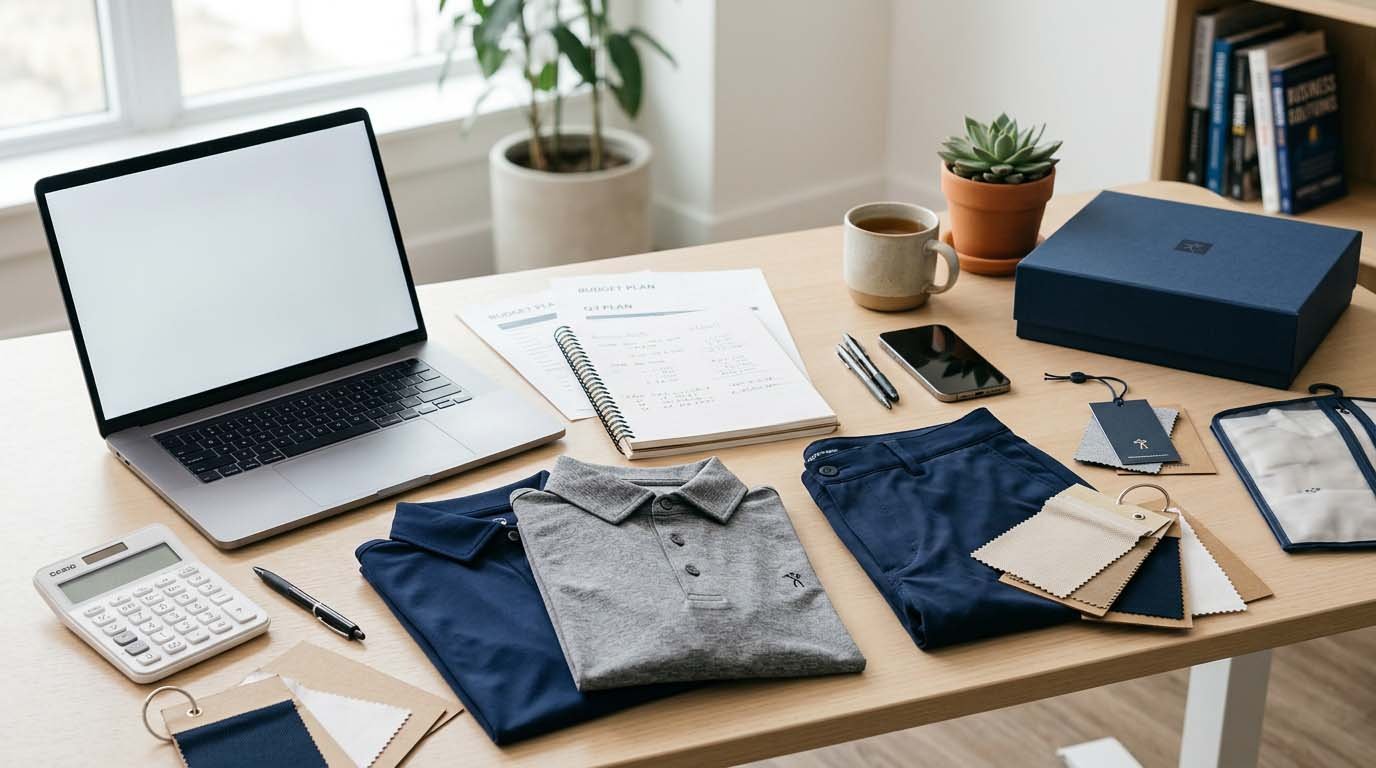
At FUWAY, many new golf apparel projects begin with cost planning before sampling. This helps buyers understand what affects the final price and how to build a first collection that fits both the brand position and the available budget.
Quick Answer: Typical Cost to Start a Golf Apparel Brand
The cost to start a golf apparel brand can vary widely. A lean launch may start with a smaller budget, while a more complete private label launch usually requires more investment.
30-Second Budget Snapshot
| Budget Plan | Estimated Total Budget | Typical Product Range | Initial Inventory Focus | Best For |
|---|---|---|---|---|
| Lean Launch | $10,000–$15,000 | 1–2 core styles | Small MOQ, limited colors, stock fabrics | Testing product demand with lower risk |
| Standard Launch | $20,000–$35,000 | 2–4 styles | Private label products with structured sampling | Serious startup brands preparing for market entry |
| Premium Launch | $40,000–$50,000+ | 4+ styles | Higher-end fabrics, custom trims, refined packaging | Brands targeting a more premium position |
MOQ means Minimum Order Quantity, which is the lowest number of pieces a manufacturer or fabric supplier requires for production. MOQ can apply by style, color, fabric, or total order depending on the project.
These figures are general planning ranges. Actual costs depend on:
- product categories
- order quantity
- fabric selection
- decoration method
- size range
- number of colors
- packaging requirements
- shipping method
- launch and marketing strategy
For most new golf apparel brands, the first production order is the largest investment. That is why controlling SKU count and choosing the right first products is critical.
Main Cost Categories for a Golf Apparel Brand
A golf apparel startup budget usually includes both product-related and brand-related expenses.
| Cost Category | Typical Budget Range | What It Includes |
|---|---|---|
| Product Development | $500–$2,500+ | Tech packs, samples, revisions, fit review |
| Initial Inventory | $5,000–$25,000+ | Bulk production, fabric, trims, labels, packaging |
| Branding & Website | $1,500–$5,000+ | Logo, visual identity, e-commerce setup, product photos |
| Logistics | Variable | Freight, duties, customs, warehousing, delivery |
| Launch Marketing | $2,000–$15,000+ | Content, ads, influencers, email marketing, promotions |
| Buffer | 10%–20% of total budget | Delays, sample changes, reorders, unexpected costs |
The exact percentage varies by business model, but many new brands underestimate inventory, logistics, and marketing. A balanced budget should leave enough room to sell the product after it is produced.
Product Development and Sampling Costs
Product development is where the idea becomes a manufacturable garment. This stage should not be skipped because it directly affects fit, quality, and production accuracy.
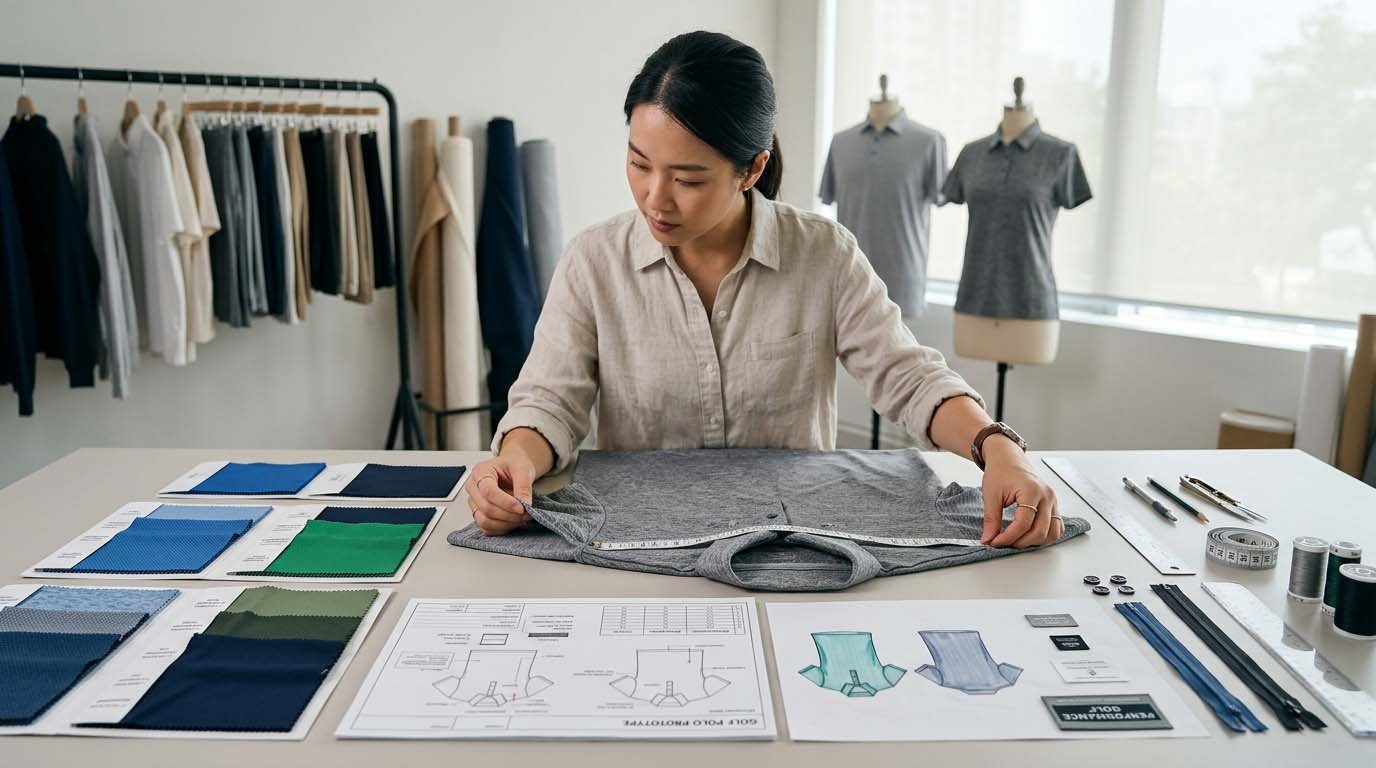
Product development may include:
- product concept review
- fabric selection
- tech pack preparation
- pattern adjustment
- logo placement planning
- trim and label selection
- sample making
- fitting and revision
A tech pack, or technical package, is a document that explains how a garment should be made. It usually includes measurements, construction details, fabric information, trims, artwork placement, labels, packaging, and other production requirements.
Golf Apparel Sampling Flow
A clear sampling process helps buyers avoid costly mistakes before bulk production.
Product Concept
      ↓
Fabric & Trim Review
      ↓
Tech Pack / Specification Confirmation
      ↓
Proto Sample
      ↓
Fit Review & Movement Test
      ↓
Revised Sample
      ↓
Pre-Production Sample Approval
      ↓
Bulk Production
      ↓
Top-of-Production / Quality Check
Common Sampling Stages
| Sample Stage | Purpose |
|---|---|
| Proto Sample | Checks first construction, silhouette, and general fit |
| Fit Sample | Confirms measurement changes and movement comfort |
| Pre-Production Sample | Confirms final fabric, trims, branding, and construction |
| Size Set Sample | Reviews grading across different sizes before production |
| Top-of-Production Sample | Checks whether early production output matches the approved standard |
For golf apparel, sampling is especially important because the product must perform during movement. A polo or short may look acceptable in photos but still fail during swing rotation, walking, bending, or long wear.
What affects sampling cost?
Sampling cost depends on:
- garment complexity
- fabric availability
- number of revisions
- special trims
- embroidery or printing
- number of sizes sampled
- whether custom patterns are required
For new brands, using a proven base pattern and adjusting fit details is often more cost-efficient than developing every pattern from zero.
Initial Inventory and Manufacturing Costs
Initial inventory is usually the largest cost when starting a golf apparel brand. This includes the first bulk production order, fabric, trims, labels, packaging, and sometimes inspection or shipping-related costs.
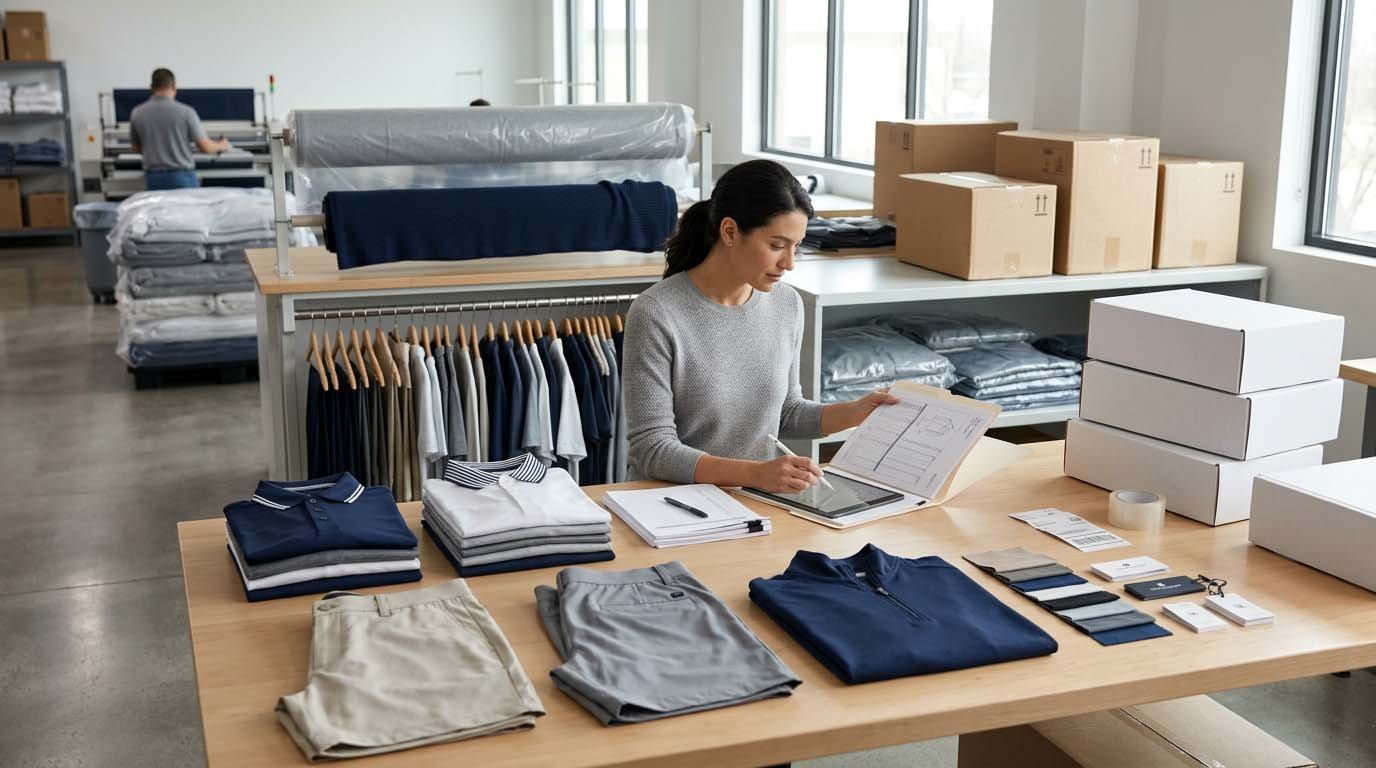
A first production order usually depends on MOQ. As mentioned above, MOQ means Minimum Order Quantity, or the minimum number of pieces required for production. MOQ can vary by manufacturer, fabric supplier, and product type.
It is often affected by:
- style complexity
- fabric type
- stock fabric vs custom fabric
- number of colors
- size breakdown
- decoration method
- trim customization
- packaging requirements
Common First-Collection Structure
For many startup golf brands, a practical first collection may include:
| Product Type | Why It Works for First Launch |
|---|---|
| Performance Golf Polo | Core golf item, easy to position, strong brand representation |
| Golf Short | Practical on-course product, good repeat-purchase potential |
| Quarter-Zip or Lightweight Jacket | Adds seasonal value and higher perceived collection depth |
| Basic Layering Piece | Useful for lifestyle or cooler-weather golf positioning |
A first collection does not need too many products. A small number of well-developed styles usually performs better than a wide range with inconsistent fit or quality.
Why inventory planning matters
Ordering too much can create cash flow pressure. Ordering too little can cause stockouts if the launch performs well. The goal is to balance risk and readiness.
A practical first order should consider:
- expected sales volume
- available launch budget
- marketing plan
- reorder lead time
- storage capacity
- size and color distribution
For new brands, controlling the number of SKUs is one of the easiest ways to reduce inventory risk.
What Affects Golf Apparel Production Cost?
Golf apparel cost is not determined by quantity alone. The final unit price depends on how the product is built.
| Cost Factor | How It Affects Price |
|---|---|
| Fabric Type | Performance fabrics, recycled fabrics, UV fabrics, and premium blends can increase cost |
| Fabric Weight / GSM | GSM means grams per square meter; heavier or more technical fabrics may affect cost, drape, and comfort |
| Fabric Availability | Stock fabrics are usually more cost-efficient than custom-developed fabrics |
| Order Quantity | Higher quantities often reduce unit cost, but increase total inventory investment |
| Style Complexity | More panels, zippers, pockets, or special seams increase labor cost |
| Decoration Method | Embroidery, heat transfer, silicone logo, and woven patches have different costs |
| Private Label Trims | Custom labels, hangtags, buttons, zipper pullers, and packaging add cost |
| Color Count | More colors may increase MOQ pressure and fabric management complexity |
| Size Range | Wider size ranges require more grading control and inventory planning |
| Quality Control / AQL | AQL means Acceptable Quality Limit; it is an inspection standard used to define acceptable defect levels in production |
| Shipping Method | Air freight is faster but more expensive; sea freight is slower but more economical |
The most cost-efficient product is not always the cheapest one. For golf apparel, fabric hand feel, stretch, recovery, breathability, and wash performance strongly influence customer satisfaction.
Reducing cost should not mean reducing product quality. A better strategy is to simplify the product range, limit color count, and choose stable materials.
Branding, Packaging, and Website Costs
Branding and website setup are important, but they should be planned in proportion to the product budget. A strong visual identity helps the brand look professional, but it cannot replace good fit and fabric quality.
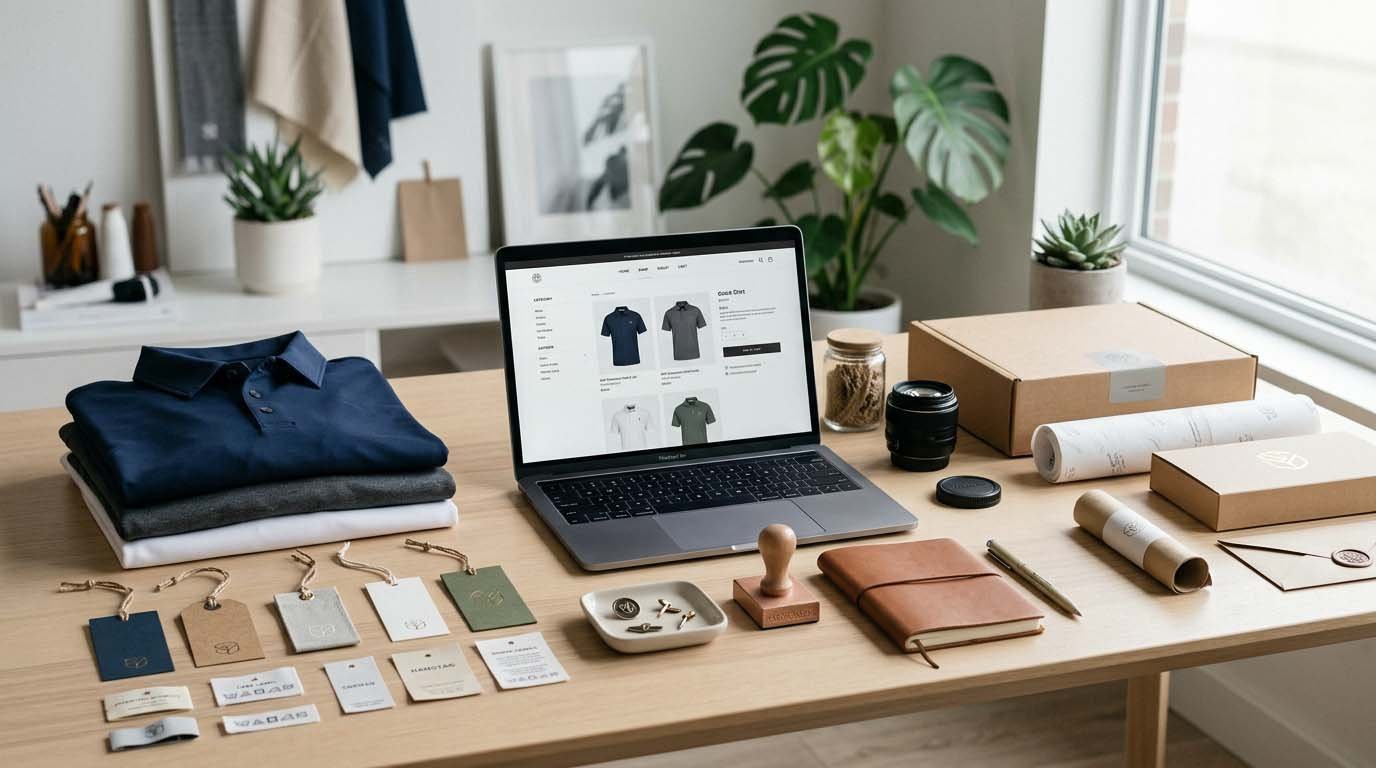
Common branding and website costs include:
- logo design
- brand colors and typography
- product naming
- hangtag design
- care label design
- packaging design
- product photography
- e-commerce website setup
- product page copywriting
Packaging cost considerations
Packaging can affect the perceived value of the product, especially for premium golf apparel. However, new brands should avoid overspending before validating demand.
Packaging options may include:
| Packaging Level | Suitable For | Cost Impact |
|---|---|---|
| Basic Packaging | Lean launch, test order | Lower cost, simple presentation |
| Branded Poly Bag + Hangtag | Standard private label launch | Balanced cost and brand appearance |
| Premium Box or Custom Packaging | Premium positioning or gifting | Higher cost, better presentation |
For many first launches, branded labels, hangtags, and clean packaging are enough. Premium packaging can be added later after product-market fit is clearer.
Marketing and Launch Budget
A golf apparel brand also needs a launch budget. Even a well-made product needs visibility, content, and a sales channel.
Marketing costs may include:
- product photography
- lifestyle content
- social media ads
- influencer seeding
- email marketing
- launch promotions
- website content
- golf club or event partnerships
For early-stage golf brands, marketing should focus on proving demand. The most useful launch content usually shows:
- fit on real golfers
- fabric movement
- on-course comfort
- styling versatility
- product details
- customer feedback
Lifestyle photos are helpful, but product-focused content usually performs better when customers are evaluating fit and quality.
Lean vs Standard vs Premium Launch Budget
Different brands need different budget plans. The right approach depends on the launch goal.
| Budget Plan | Product Range | Manufacturing Approach | Branding Level | Best For |
|---|---|---|---|---|
| Lean Launch | 1–2 core products | Stock fabrics, simple trims, controlled MOQ | Basic but clean | Testing demand with limited risk |
| Standard Launch | 2–4 products | Private label trims, better fabric options, structured sampling | Professional brand setup | Startup brands preparing for real market entry |
| Premium Launch | 4+ products | Higher-end fabrics, more customization, refined packaging | Strong visual identity | Brands targeting higher price points |
For most new golf apparel brands, the standard launch model is the most balanced. It gives enough product depth to appear credible while keeping development and inventory risk manageable.
How to Reduce Startup Costs Without Sacrificing Quality
The best way to reduce startup cost is not to make cheaper products. It is to make smarter product decisions.
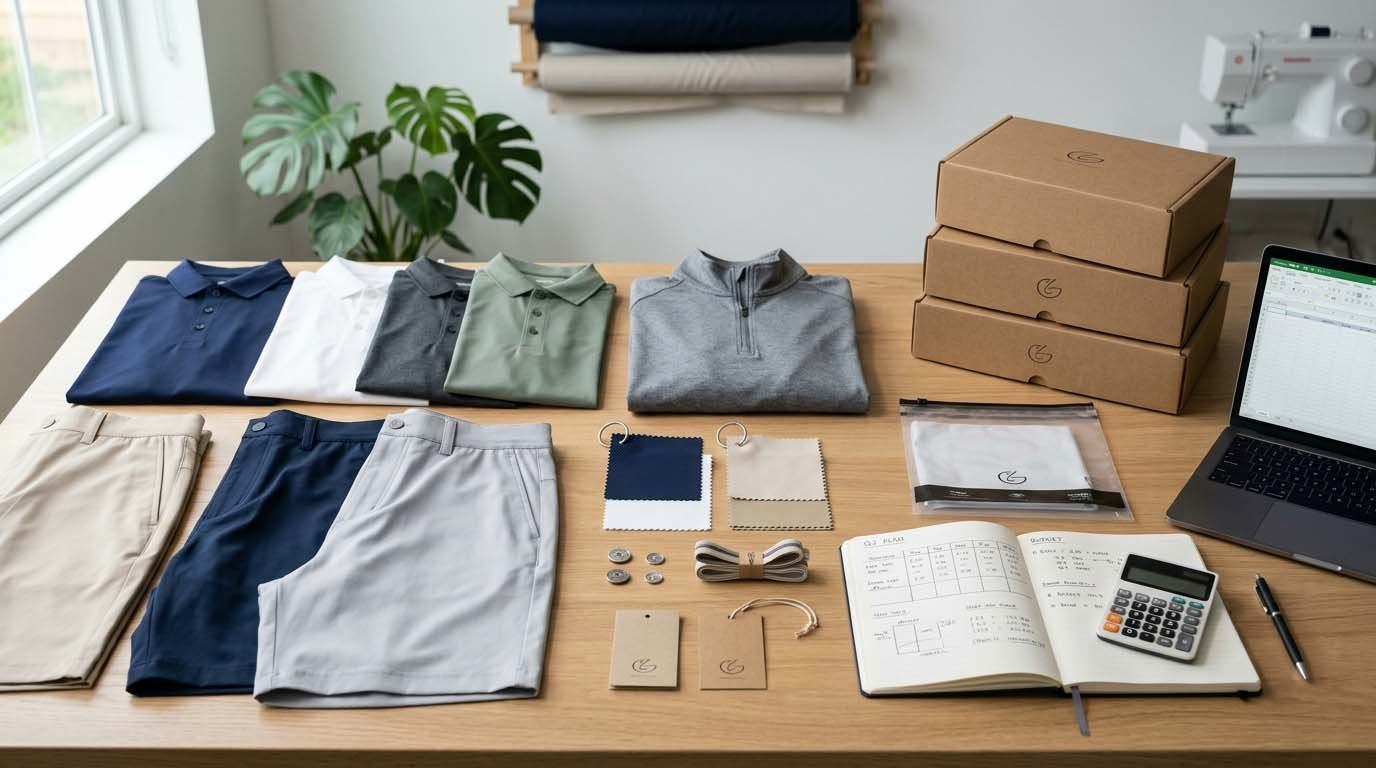
1. Start with fewer products
A first launch does not need 8 or 10 styles. Starting with 2 to 4 products helps reduce sampling cost, inventory risk, and production complexity.
2. Limit color count
Every additional color increases fabric planning and inventory pressure. Classic colors such as navy, white, black, grey, and green are often safer for a first launch.
3. Use proven base patterns
Developing new patterns from scratch can increase cost and time. Many new brands can start with existing fit blocks and customize details such as length, collar, placket, trim, and branding.
4. Choose stable fabric options
Stock or readily available performance fabrics often reduce lead time and MOQ pressure. Custom fabric development can be considered later when order volume is more stable.
5. Keep trims and packaging practical
Custom trims are useful for brand identity, but they should match the budget. New brands can start with essential private label elements such as neck labels, care labels, hangtags, and clean packaging.
6. Plan production and logistics early
Last-minute decisions often create extra cost. Buyers should confirm production timeline, inspection process, packing method, and shipping plan before bulk production begins.
7. Protect quality where it matters
Do not cut corners on:
- fabric comfort
- stretch and recovery
- stitching quality
- fit
- wash performance
- size consistency
Low-quality golf apparel can lead to returns, poor reviews, and weak reorder potential.
Common Budgeting Mistakes New Golf Apparel Brands Make
Many first-launch cost problems are avoidable with better planning.
Spending too much before product validation
Branding, packaging, and marketing matter, but product quality must come first. Fit, fabric, and construction should be validated before heavy spending on presentation.
Launching too many SKUs
Too many styles, colors, and sizes increase cost quickly. A smaller collection is easier to manage and easier to improve.
Underestimating sampling time and cost
Most products need revisions. Budgeting for only one sample round can create delays or force poor decisions.
Ignoring shipping and duty costs
Freight, customs, and import-related costs can significantly affect the final landed cost.
Not leaving budget for marketing
A first order only becomes valuable if customers see it. Brands should reserve enough budget for product photography, content, ads, or partnerships.
Forgetting about the second order
If the first launch sells well, a reorder may be needed quickly. Planning reorder timing helps avoid losing sales momentum.
FAQ: Cost to Start a Golf Apparel Brand
Can I start a golf apparel brand with a small budget?
A limited launch may be possible with a smaller budget, especially if the product range is very focused. However, buyers should be realistic about MOQ, sampling, fabric quality, packaging, and marketing. For a commercially prepared launch, a larger budget is usually more practical.
What is the biggest cost when starting a golf apparel brand?
The first production order is usually the biggest cost. It includes garment manufacturing, fabric, trims, labels, packaging, and sometimes inspection or shipping-related expenses.
How many products should I launch first?
Many new golf apparel brands start more effectively with 2 to 4 core products. A performance polo, golf short, and optional layering piece can be enough for a first collection.
What affects the unit cost of golf apparel?
Unit cost is affected by fabric type, fabric weight, order quantity, construction complexity, decoration method, trims, packaging, size range, quality requirements, and shipping method.
What does MOQ mean in golf apparel manufacturing?
MOQ means Minimum Order Quantity. It is the minimum number of pieces required for a manufacturer or fabric supplier to accept production. MOQ may be calculated by style, color, fabric, or total order.
What does GSM mean when choosing fabric?
GSM means grams per square meter. It describes fabric weight. For golf apparel, GSM affects hand feel, breathability, drape, opacity, and seasonal suitability.
What does AQL mean in quality control?
AQL means Acceptable Quality Limit. It is a commonly used inspection standard that defines how many defects are acceptable within a checked production batch.
Should I choose the cheapest fabric to reduce cost?
Usually not. Golf customers expect comfort, stretch, breathability, and durability. Reducing fabric quality may lower the unit price, but it can damage customer satisfaction and brand reputation.
Is custom packaging necessary for a first launch?
Not always. Clean and professional packaging is important, but fully custom premium packaging can be added later. Many new brands begin with branded labels, hangtags, and simple packaging.
How much budget should be reserved for unexpected costs?
A 10% to 20% buffer is often useful for sample revisions, freight changes, packaging adjustments, production delays, or early reorder needs.
When should I contact a manufacturer?
It is best to contact a manufacturer before finalizing the full collection plan. A manufacturer can help review fabric direction, MOQ, sampling process, production feasibility, and cost factors before money is spent on unsuitable designs.
Final Thoughts
Starting a golf apparel brand typically requires a planned budget for product development, first inventory, branding, packaging, logistics, and launch marketing. The actual amount depends on how many products you launch, how customized they are, and what level of quality you want to deliver.
For most new brands, the best strategy is to start focused. Build a small collection with reliable fabrics, validated fit, clear branding, and realistic manufacturing planning. A strong first launch is not about producing the largest collection. It is about creating products that customers trust and that the brand can reorder with confidence.
Need Help Planning Your Golf Apparel Production Budget?
FUWAY supports golf apparel brands with product development and manufacturing planning, including:
- golf polo and golf short development
- fabric selection for performance and lifestyle golf apparel
- sample development and fit review
- private label trims and packaging coordination
- MOQ and production planning
- bulk manufacturing and quality control support
If you are preparing to launch a golf apparel brand, send us your product concept, target quantity, budget range, preferred fabric direction, and launch timeline. FUWAY can help you evaluate production feasibility, compare suitable fabric options, estimate key cost factors, and plan a practical sampling and manufacturing process.